
Last updated November 24, 2026
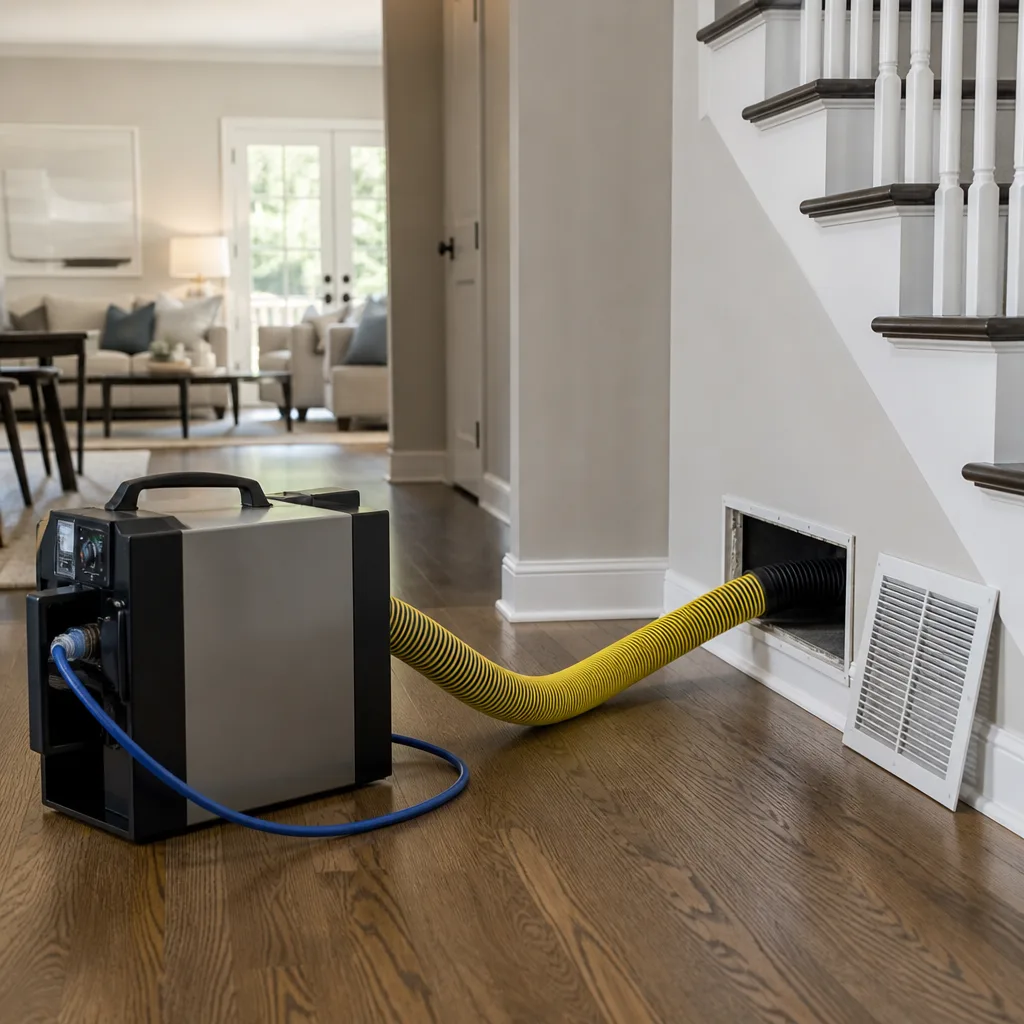 Whole-home duct cleaning
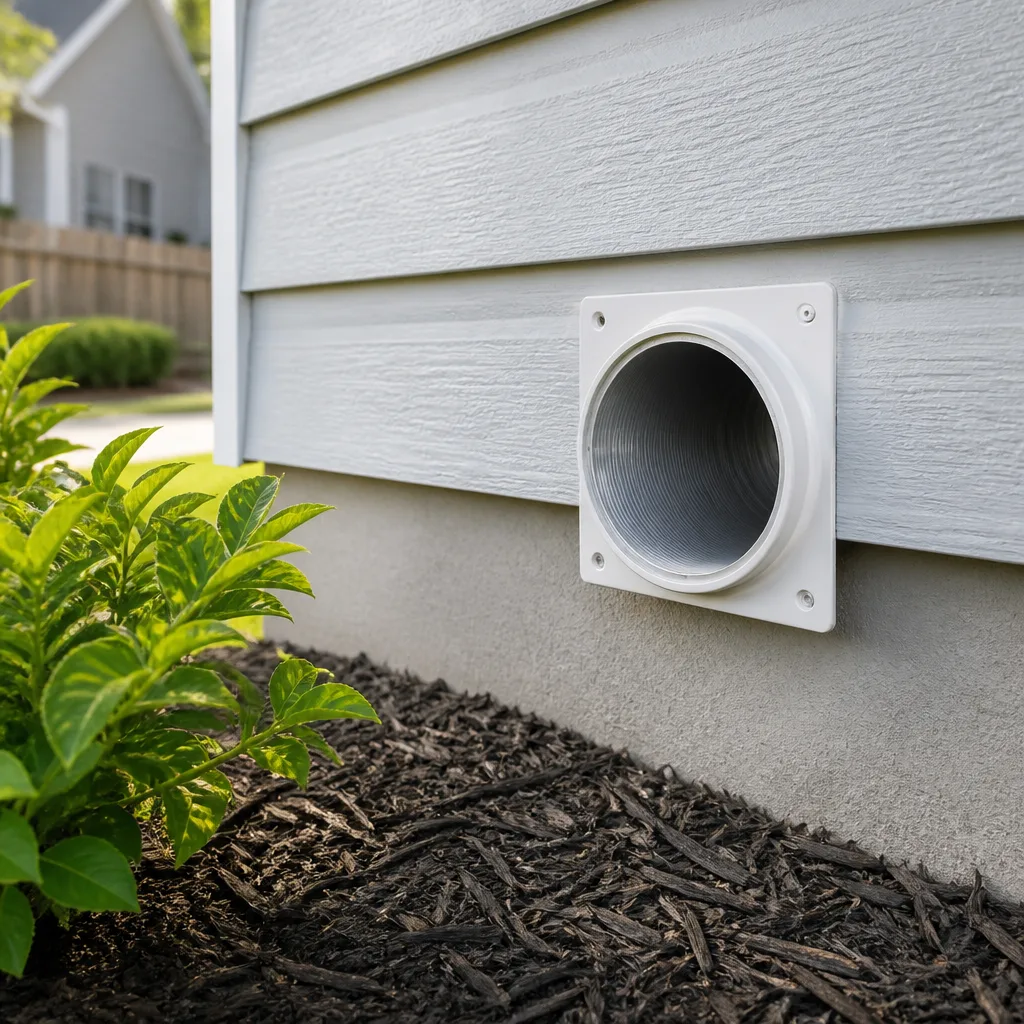 Dryer vent cleaning
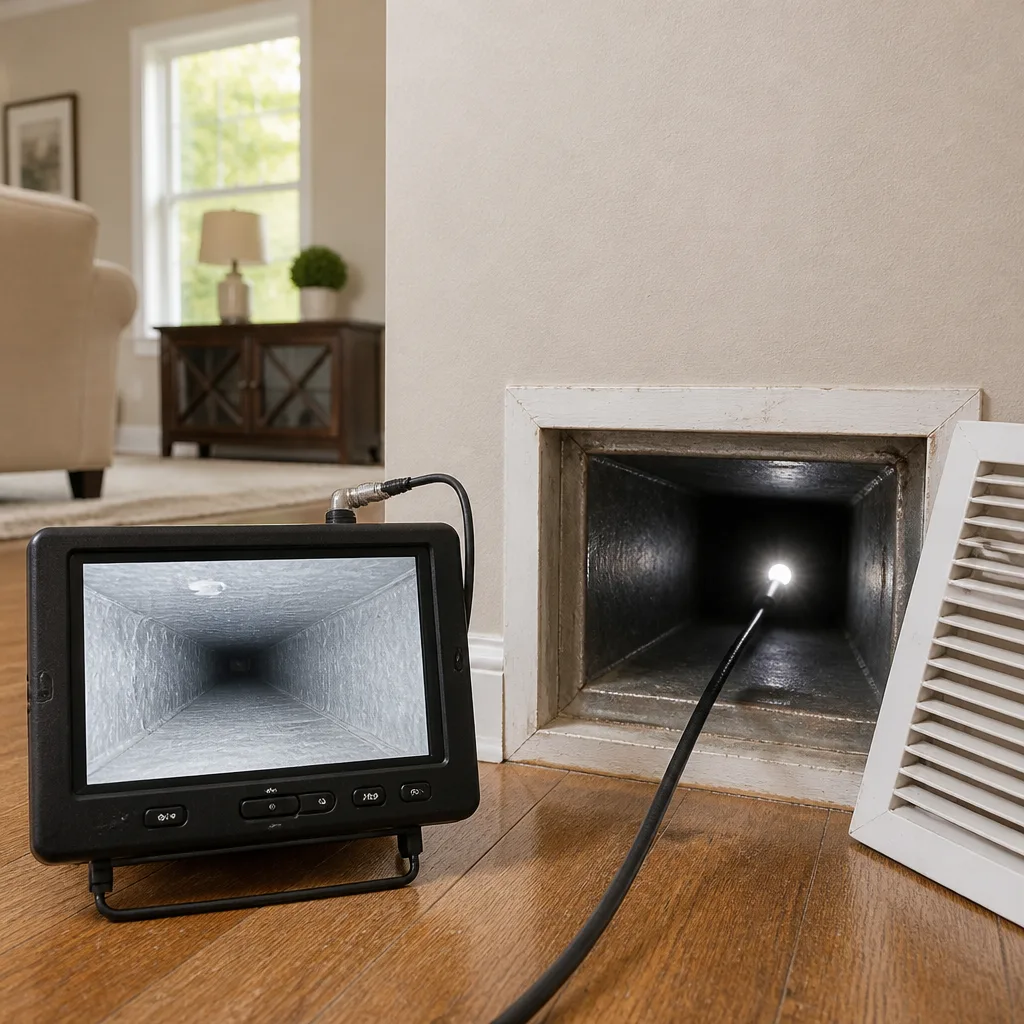 Camera inspection
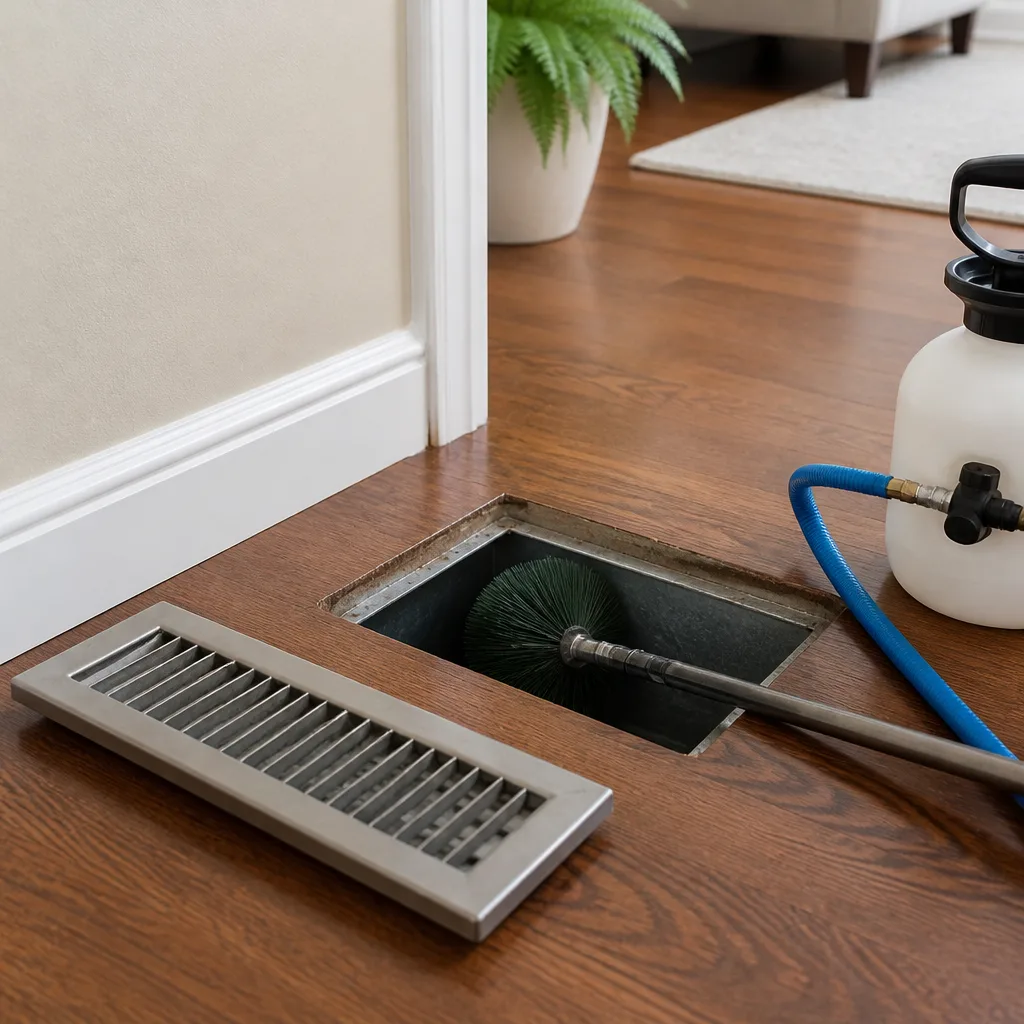 Sanitizing & deodorizing
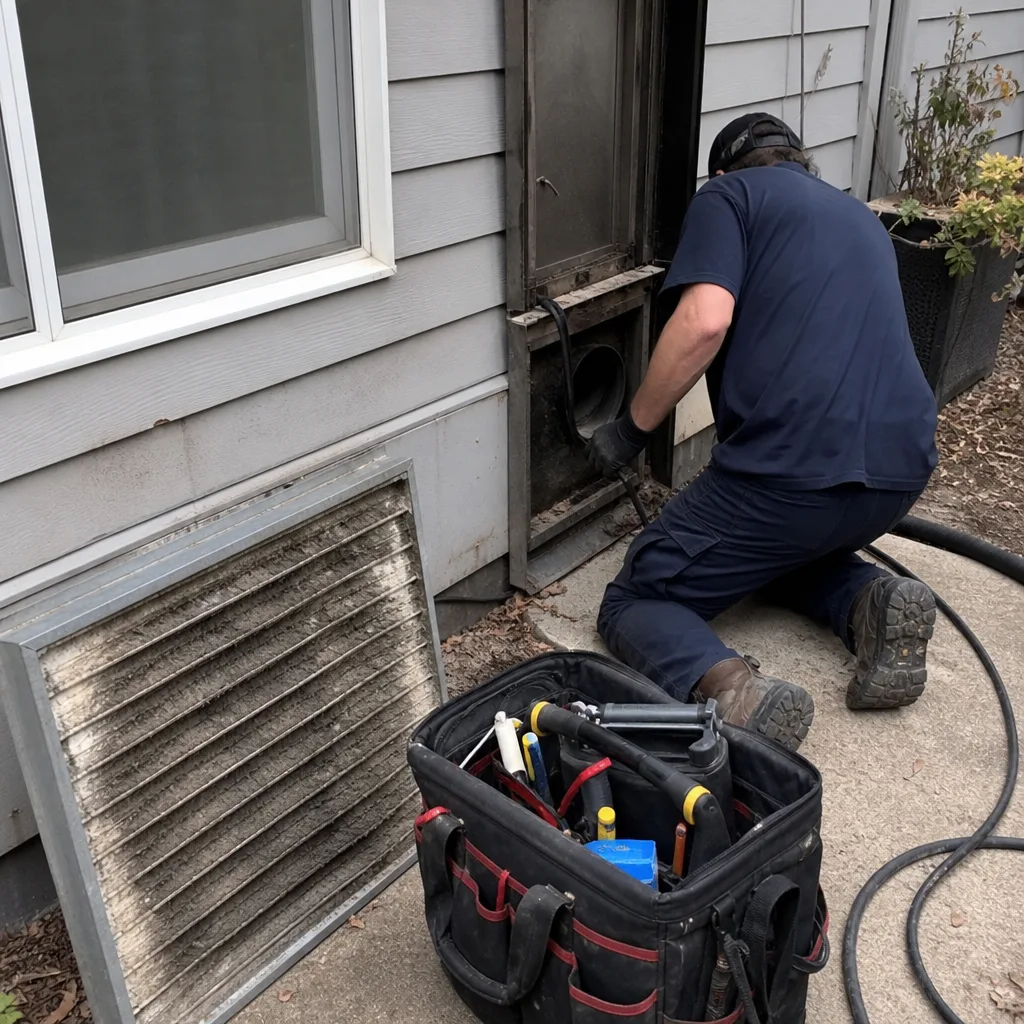
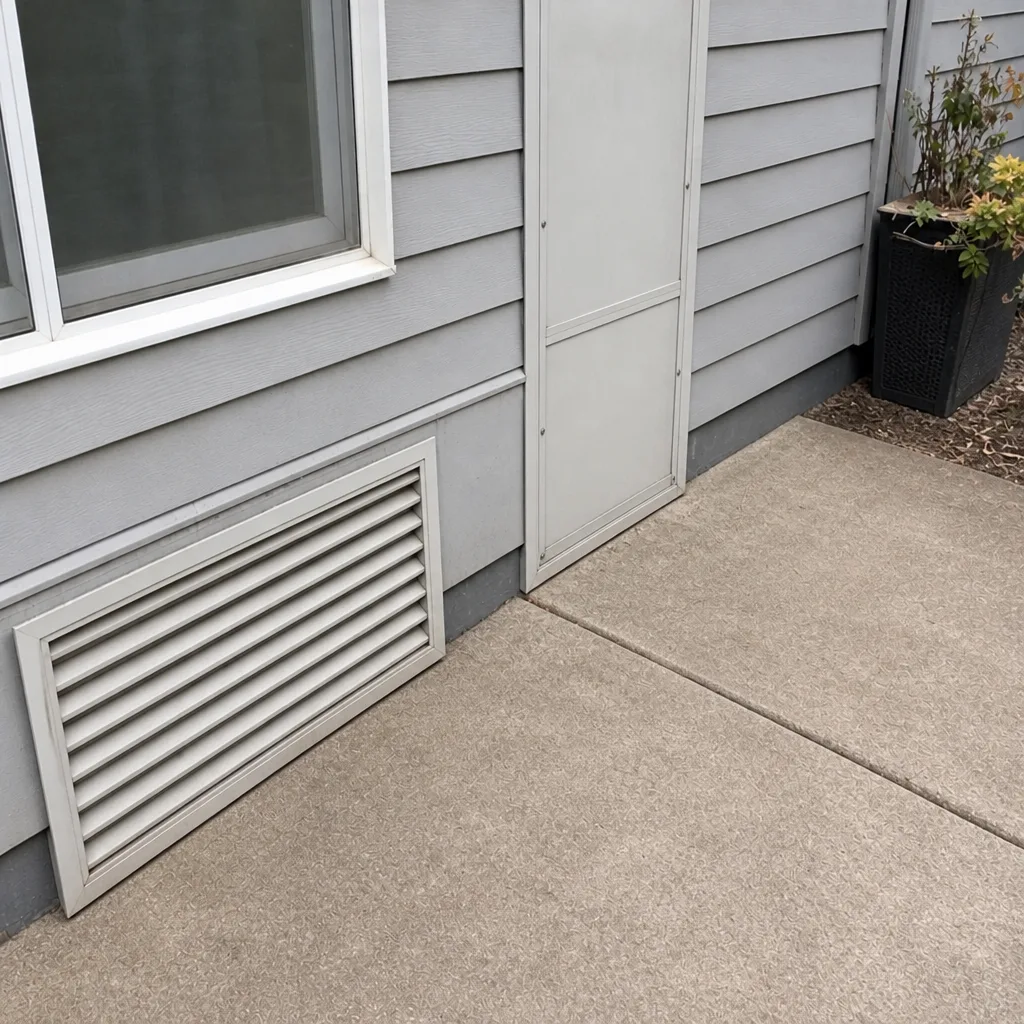
Whole-system duct and dryer vent check with before-and-after photos - you see exactly what came out of your vents
That "$99 whole-house special" is a bait ad - the real number appears once they are in your hallway, or the "clean" is a shop-vac at the register. We photograph the inside of your ducts before and after instead.
Air Duct Cleaning Maintenance Checklist for Tallyn’s Reach Homeowners
Most homeowners change the filter and consider their duct maintenance done. But the filter only catches what’s already moving through the system; it does nothing about the debris already coating duct walls, sitting in return pans, or clogging dampers. That’s the gap this guide fills.
A duct maintenance checklist isn’t a cleaning schedule. It’s a monitoring protocol. It tells you what to look for between professional visits so small problems don’t compound into expensive remediation. Below, we’ve laid out a room-by-room, component-by-component inspection routine that Tallyn’s Reach homeowners can actually execute, with specific checks for monthly, quarterly, and annual intervals.
Quick Answer
A practical air duct maintenance protocol has three tiers: monthly filter and grille checks, quarterly inspection of accessible duct connections and return pans, and annual professional cleaning with a full system review. Watch for dust pattern changes, airflow drops, and post-event debris (wildfire smoke, pollen surges) to know when an observation should become a professional call.
Styles & brands we work with
- Whole-home duct cleaning
- Dryer vent cleaning
- Camera inspection
- Sanitizing & deodorizing
Table of Contents
- Monthly Checks: What to Look For
- Quarterly Inspections: Connections and Return Air
- Annual Professional Cleaning
- Reading Return Air Grille Dust Patterns
- Colorado-Specific Triggers: Wildfire Smoke and Pollen
- When to Log an Observation vs. Call a Pro
- Common Mistakes to Avoid
- When to Call a Professional
Monthly Checks: What to Look For
Monthly checks are fast. Fifteen minutes per month, done on the same day each month, catches the majority of creeping problems before they escalate. Keep a simple log: date, what you saw, what you did.
Your filter is the first stop. Pull it, hold it up to a light. If you can’t see light through it, it’s overdue. In Tallyn’s Reach, where homes run furnaces from October through April and close up tight against winter cold, filters load faster than in milder climates. If you have pets or a household member with allergies, check every three to four weeks instead of monthly.
Next, run the system and listen. A new rattle, whistle, or whoosh at a register is worth noting. It could be a loose damper, a partially disconnected flex run, or debris shifting inside. These sounds often go unnoticed until they become a rattling problem.
Finally, check supply register grilles for visible dust buildup. A light film is normal. Thick, fuzzy accumulation on a register that you cleaned last month is not; it suggests dust is being pushed through at volume, which points to a filtration or source issue upstream.
- Pull the air filter and check light transmission.
- Run the system and listen for new sounds at each register.
- Wipe one supply grille with a white cloth; inspect the result.
- Note anything unusual in your log with the date.
If you’ve never had air duct cleaning done in your home, a baseline professional inspection is worth scheduling before you begin a monitoring routine. You need to know the starting condition before you can track changes.
Quarterly Inspections: Connections and Return Air
Quarterly checks take about 45 minutes and go deeper. You don’t need specialized tools, just a flashlight, a hand mirror, and access to exposed ductwork, usually in the attic, basement, or mechanical closet.
Flex Duct Connections
Flexible duct is common in Tallyn’s Reach homes and is also where many silent efficiency losses hide. Walk the accessible run and look for three things: sag, kinks, and disconnection.
- Sag: A flex run that dips between supports reduces airflow. The duct should run as straight as possible between hangers. Sagging lengths deserve a note in your log.
- Kinks: A sharp bend (common at corners where runs turn 90 degrees) pinches the inner liner. Look for a flattened, creased section.
- Disconnection: A duct separated from its collar or trunk fitting will leak conditioned air into the attic. Check the tape or mastic at every visible joint. Gaps or a disconnected collar are a same-week call.
Return Air Pans and Grilles
Return ducts pull air back to the furnace, so they carry the heaviest load of dust and pet hair. Remove return grilles (most lift off or have two screws) and look into the return pan. A thin dust film is normal. A visible pile of debris, hair, or construction dust is not, and points to air bypassing your filter.
While the grille is off, shine a light through the grille itself. Hold it at an angle. Heavy, matted accumulation on the back of the grille often means unfiltered air is flowing through. That’s a professional inspection trigger, not a “vacuum it and move on” situation.
Annual Professional Cleaning
Annual professional cleaning is your baseline reset. It clears what you can’t reach, and it gives you a condition report to monitor against. A thorough cleaning visit should include the supply and return runs, registers, grilles, the furnace cabinet, and the blower if accessible.
In our experience, the difference between a superficial job and a real one is equipment. Professional-grade equipment, not repurposed shop vacuums, makes the difference. We use a Rotobrush rotary system on every duct job and Nikro HEPA-rated vacuum equipment to contain what’s dislodged, so debris leaves the system instead of settling back into it. The HVAC cleaning side matters too: the blower wheel and evaporator coil are where dust gathers and degrades performance.
If your home is older, has had a renovation, or has never had a professional suite visit, expect the first cleaning to uncover issues the annual routine will then maintain. That’s normal. The point of the annual visit is to catch conditions while they’re still cleaning-level, not repair-level.
If your checklist turns up more than surface dust, mention it when you book. We carry Abatement Technologies equipment for elevated air-quality and remediation scenarios, so we come prepared for the scope, not just the cleaning.
Reading Return Air Grille Dust Patterns
Return grille dust patterns are one of the most useful diagnostic signals available to a homeowner. The shape tells you something about what’s happening upstream.
- Even, light film: Normal accumulation over weeks. Clean it and move on.
- Heavy buildup concentrated at one edge or corner: Suggests uneven airflow through that grille, often a sign of a partially blocked or undersized return.
- Dark, localized stains or streaks: Air is being pulled through a gap, bypassing the filter and settling in a concentrated spot.
- Matted hair or debris matted to the grille face: Unfiltered air, or filter media that’s been compromised.
- Gaps around the grille frame: Return air is short-circuiting around the filter. Often improvable with tape or a weatherstrip gasket.
Pattern changes are your best early warning. If a return that used to collect evenly now shows concentrated staining, something has changed upstream, and that’s exactly when to log a professional inspection.
Colorado-Specific Triggers: Wildfire Smoke and Pollen
Colorado’s climate adds two seasonal checkpoints to any duct maintenance routine: post-wildfire-smoke events and post-spring-pollen surge.
Wildfire smoke events in the Front Range push fine particulate into homes through cracks, gaskets, and any return that bypasses a filter. After a smoke event, change the filter early and check return grilles for fine ash-colored film. If the smoke was heavy or prolonged, write the date in your log: it’s worth a professional inspection before the heating season, especially if anyone in the house has asthma or other respiratory sensitivity.
Spring pollen in Tallyn’s Reach runs heavy with juniper and cottonwood, and the dust has a yellow-green tint. If your return grilles pick up visibly more after the pollen surge, schedule your annual cleaning after it, not before; you’ll remove the season’s deposit rather than leaving it in place through the season.
Add these to your seasonal checklist:
- Within a week of a major smoke event: check and replace the filter, note the date.
- Within two weeks of the spring pollen peak: check return grilles and log the condition.
- Before heating season start: run a full quarterly inspection and book the annual cleaning.
When to Log an Observation vs. Call a Pro
Log observations on a simple calendar. Call a pro when the observation crosses one of five thresholds: a physical break, visible debris in return pans, persistent new sounds, recurring filter overload, or any sign of moisture.
Logging is worth it on its own. Noting “slight dust film on bedroom register, March” tells you whether the next quarterly visit shows the same thing or more. Changes over time are the signal.
Call a professional, without waiting for the next interval, for any of the following:
- A disconnected or visibly torn flex duct.
- Visible debris, matting, or construction dust inside a return pan.
- A new rattle, whistle, or whoosh that persists across two or three cycles of the system.
- The filter is visibly loaded within two or three weeks of a fresh install.
- Any moisture, mold growth, or musty smell at a register, return, or grille.
- A large swing in airflow at a register (you can feel it on your hand).
That last category matters: a gap in a duct that isn’t sealed will just keep re-contaminating the run after every cleaning. Duct repair and sealing fix the cause instead of the symptom, which is why we treat it as its own service line rather than an afterthought. Note the issue in your log, then call when it’s confirmed.
Common Mistakes to Avoid
- Changing the filter and calling it done. Filter upkeep is necessary but not sufficient. Duct walls, return pans, and grille backs still accumulate over time. Monthly checks exist to catch what the filter misses.
- Over-cleaning supply registers with a household vacuum. A household vacuum can push fine dust back into the system. A wipe-down is usually enough; deep cleaning is what the annual visit is for.
- Ignoring a disconnected flex run. A short gap that leaks conditioned air into the attic is easy to overlook and quietly expensive to run. Check connections every quarter.
- Skipping post-wildfire-smoke checks. Front Range smoke pushes fine particulate deep into return pans. A filter change within the week, and a note in the log, is the right first step.
- Scheduling annual cleaning before the spring pollen surge. You’ll clean the ducts, then the season deposits on them again. Clean after the pollen peak.
- Ignoring a new sound. A whistle or rattle that appears once and disappears is often nothing. One that persists across several cycles is often a loose damper or a partial disconnection.
- Sealing over a disconnected duct instead of reconnecting it first. Sealing is for gaps and joints, not for bypassing a fix. If you’re unsure, get an inspection before you reach for tape.
When to Call a Professional
Some situations call for a professional before your next scheduled visit. Call Air Duct Cleaning Tallyn’s Reach if you find a disconnected or torn flex duct, visible debris or matting inside a return pan, any sign of moisture or musty odor at a register, a filter that loads within a few weeks of replacement, or a new sound that persists. A first-time inspection is also worth scheduling if your home has never had its ductwork inspected, or if a renovation has left construction dust in the system. Air Duct Cleaning Tallyn’s Reach offers free estimates in Tallyn’s Reach. Call (855) 550-7311. We answer 24/7. Fast dispatch from 7am to 7pm, Sunday through Friday.
See the difference
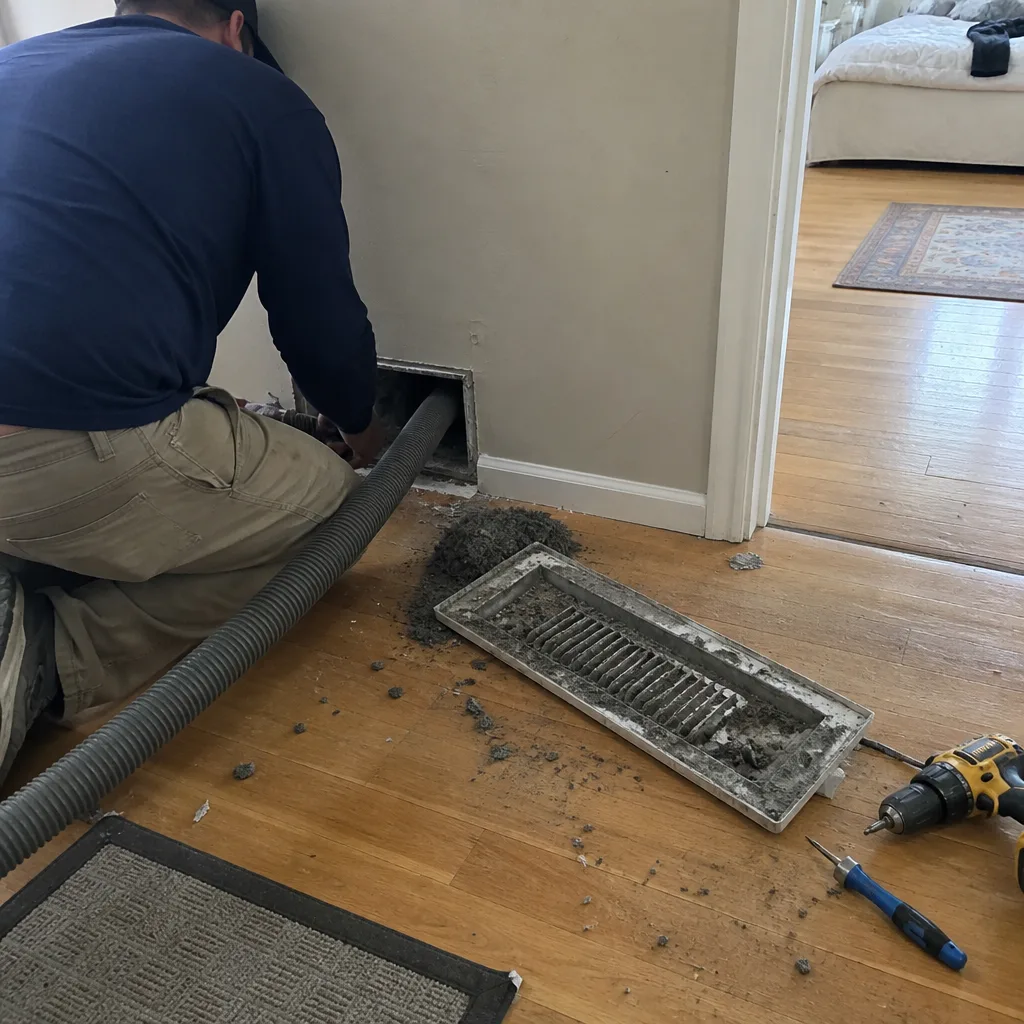 Before
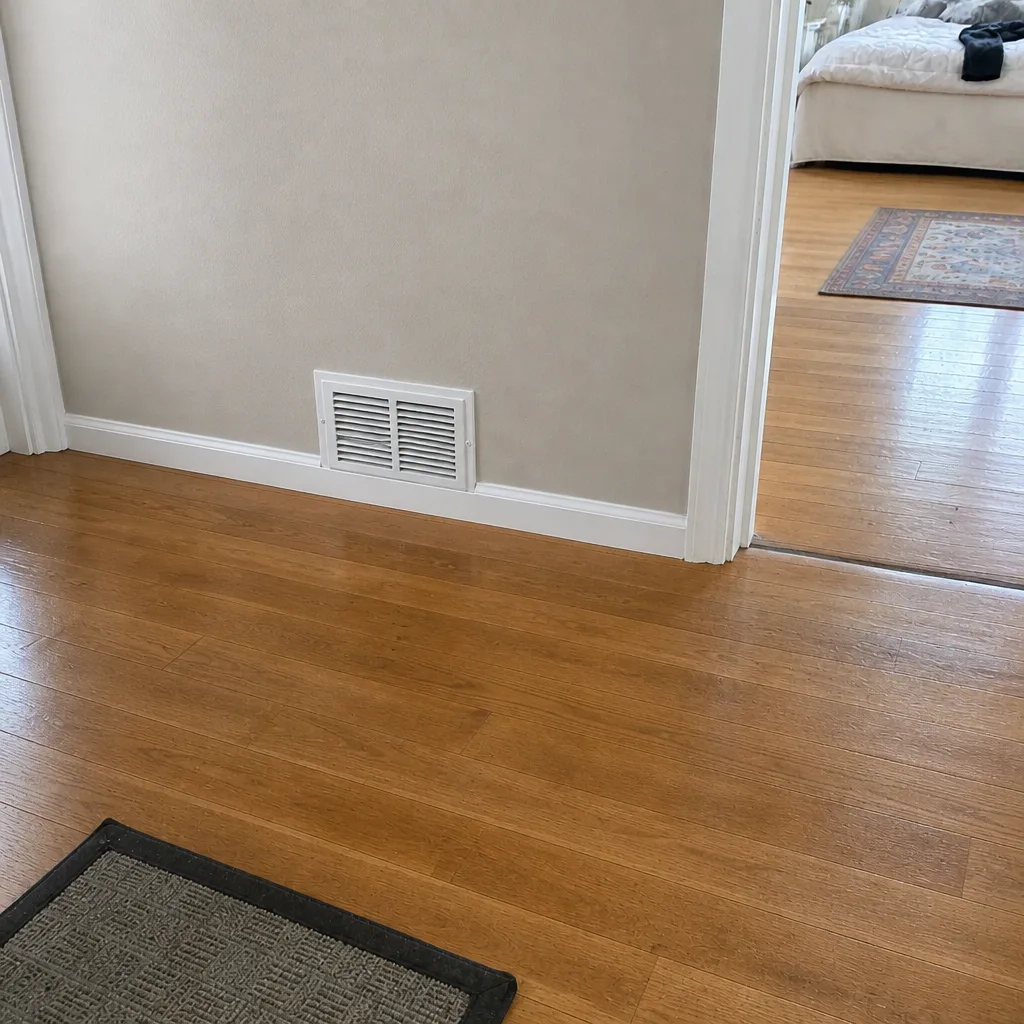 After
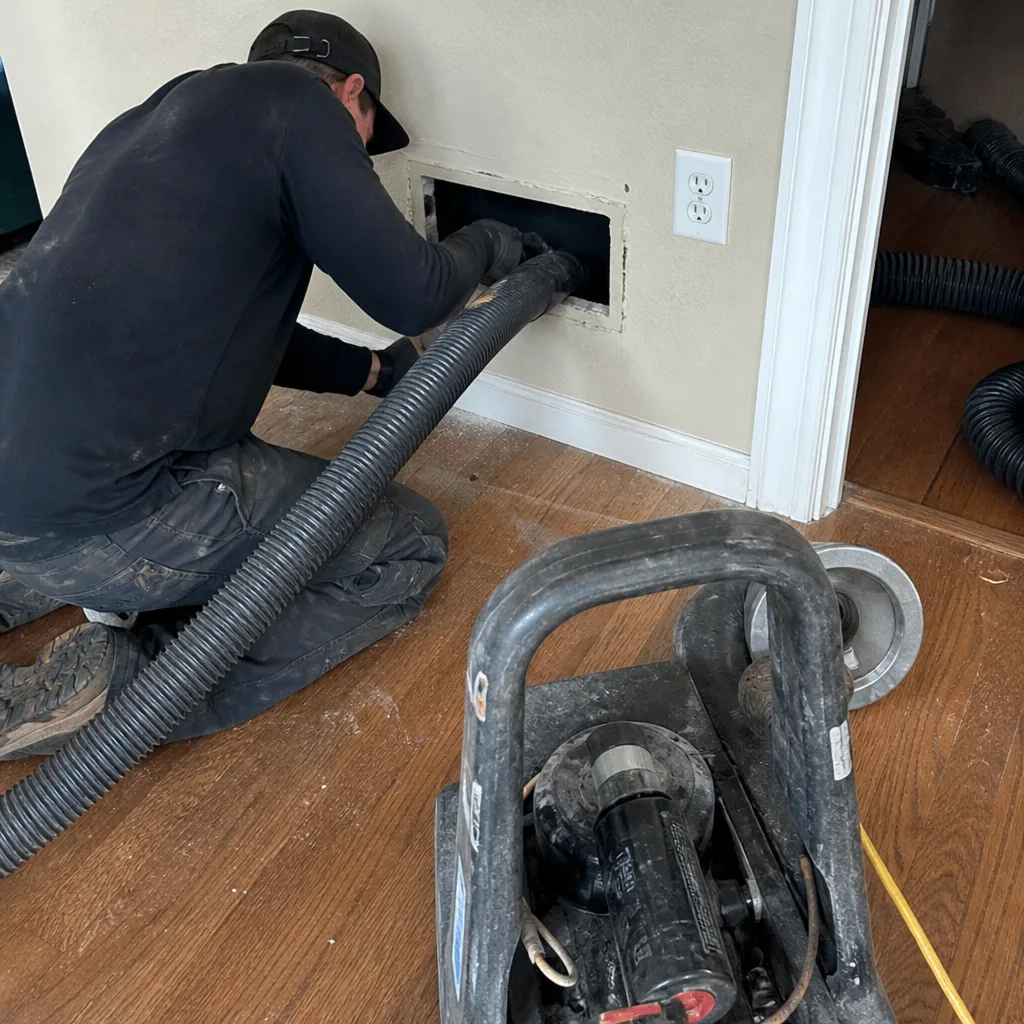 Before
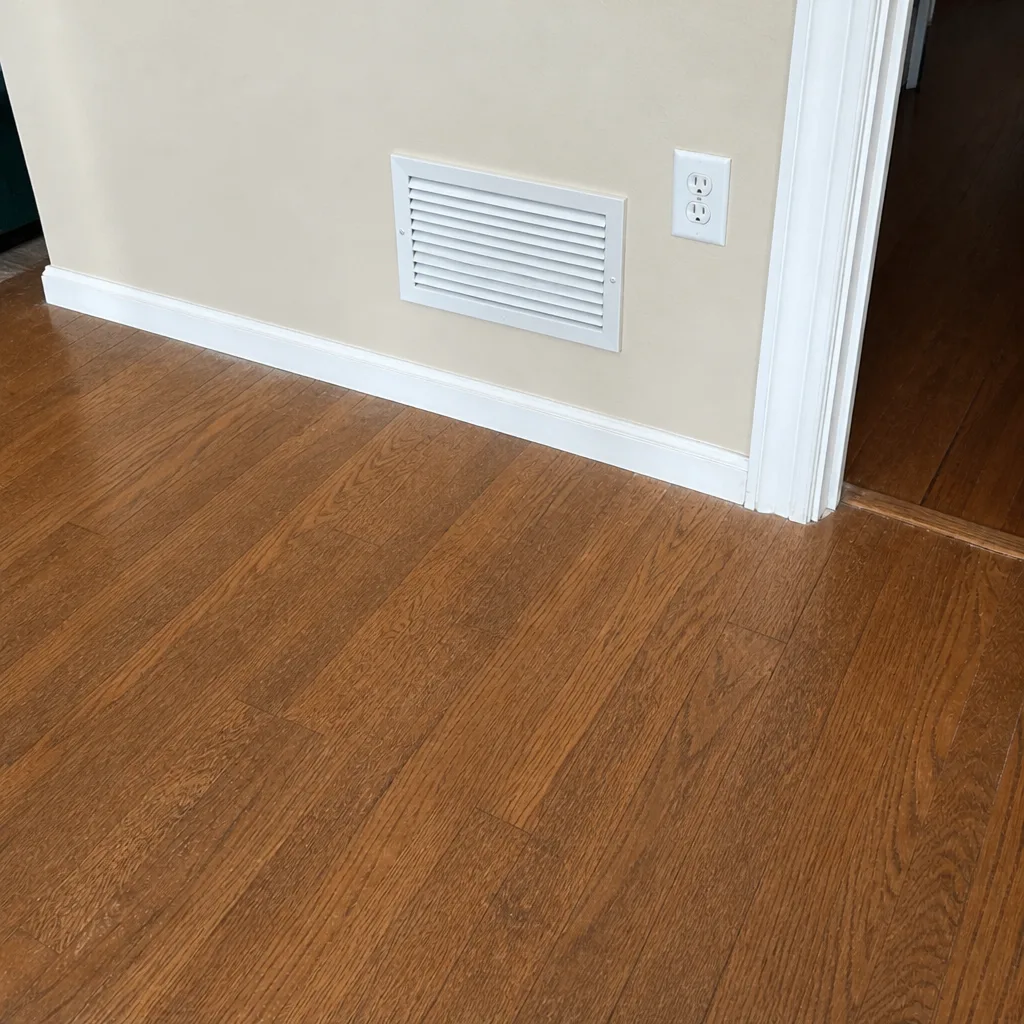 After
 Before
 After
Frequently Asked Questions
Monthly checks and quarterly inspections, with an annual professional cleaning. Tallyn’s Reach homes run forced-air systems through long heating seasons and closed-up summers, so filters load faster than in milder climates. Owners with pets or allergy concerns should check filters every three to four weeks.
Professional duct cleaning is typically priced as a whole-system service, and the written estimate sets the final price. Be wary of quotes that price by the vent, or that start with a low teaser figure: if it doesn’t cover the full system, it isn’t a full-system price. Call (855) 550-7311 for an exact quote; estimates are free.
Cheaper quotes usually cover less: fewer runs, a shop vacuum instead of professional-grade Rotary equipment, or a quick surface pass rather than a full-system clean. Ask what equipment is used and what parts of the system are included. Whole-system pricing with a written estimate is the honest way to compare.
Before-and-after photos of your own ducts, taken during the visit. Ask for them. A thorough provider will show you the condition of the returns, the supply runs, and the furnace cabinet when the job is finished.
Disconnected or sagging flex runs in attics and mechanical closets. They leak conditioned air and reintroduce dust; the fix is a proper reconnect and seal, not just another cleaning. Our technicians have up to 14 years of experience and can identify it on inspection.
It can. Juniper and cottonwood pollen accumulates on return grilles and filter faces, and a spring cleaning done before the surge misses the season’s deposit. Schedule annual cleaning after the pollen peak, and log the grille condition to compare year to year.
The Bottom Line
A duct maintenance checklist works because it catches small things while they’re still small. Check monthly: filter, sounds, register dust. Inspect quarterly: flex runs, return pans, grille backs. Schedule an annual professional cleaning after the spring pollen surge and after heating season starts. Log everything, and know the five thresholds that turn an observation into a professional call. In Tallyn’s Reach, add wildfire-smoke checks after events and a pre-season review before the furnace runs. That routine, kept over years, is what keeps ducts clean and repair bills rare.
Ready to set a baseline? Call Air Duct Cleaning Tallyn’s Reach at (855) 550-7311 for a free estimate. We answer 24/7. Fast dispatch from 7am to 7pm, Sunday through Friday.
Written by the team at Air Duct Cleaning Tallyn’s Reach.