
Last updated November 24, 2026
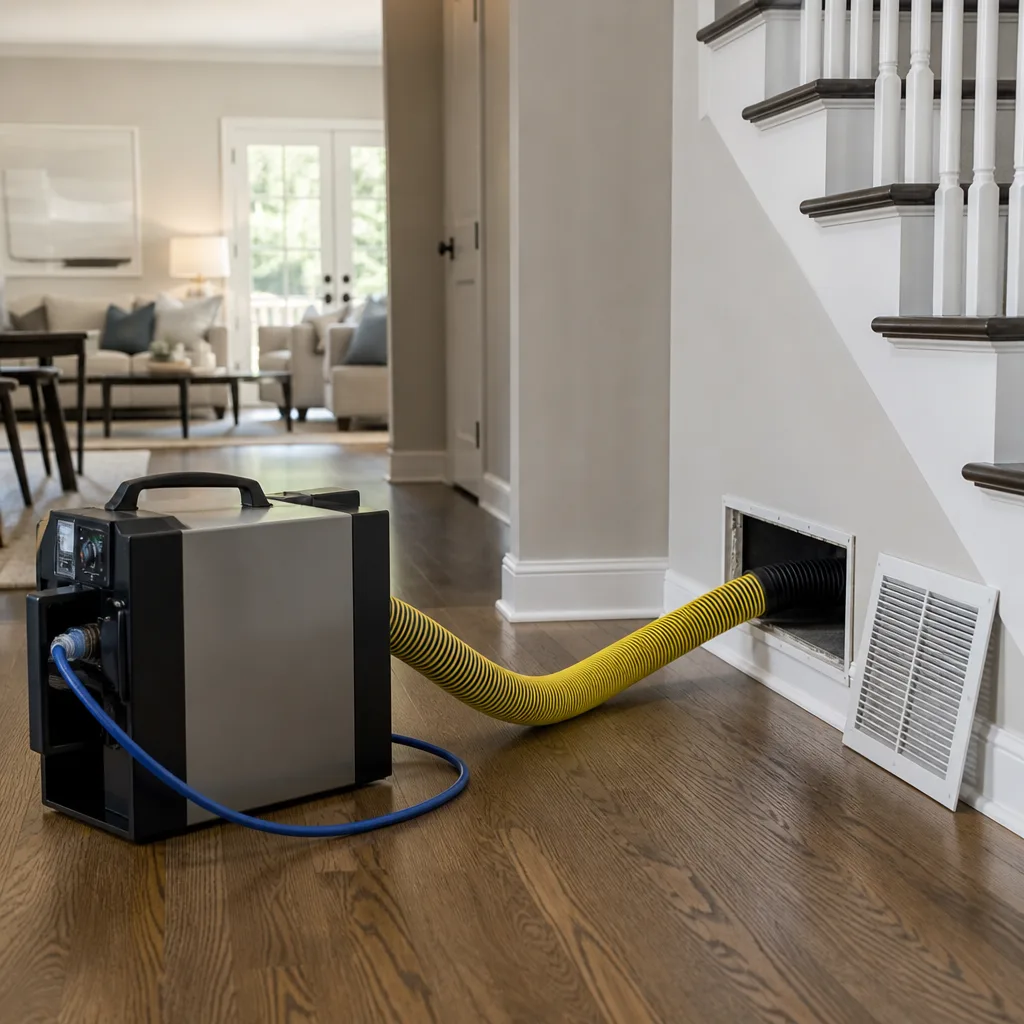 Whole-home duct cleaning
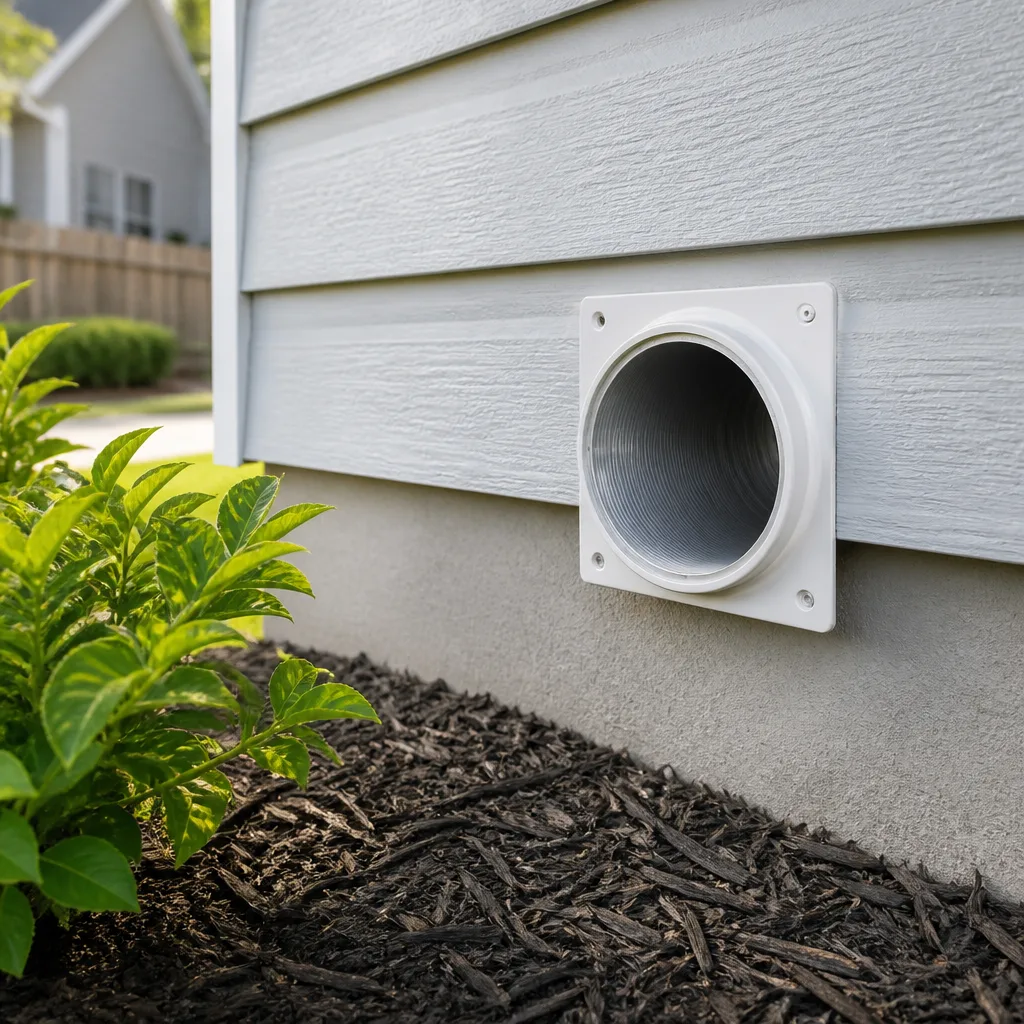 Dryer vent cleaning
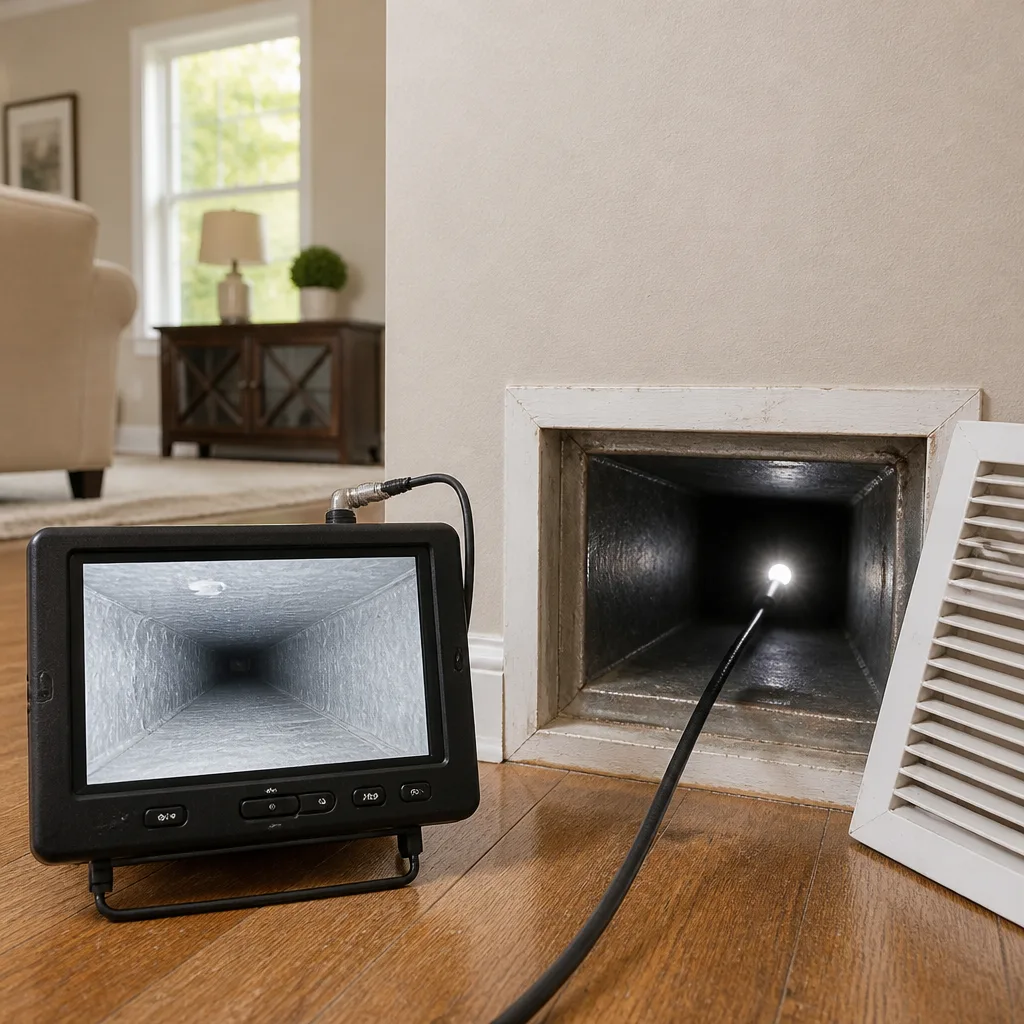 Camera inspection
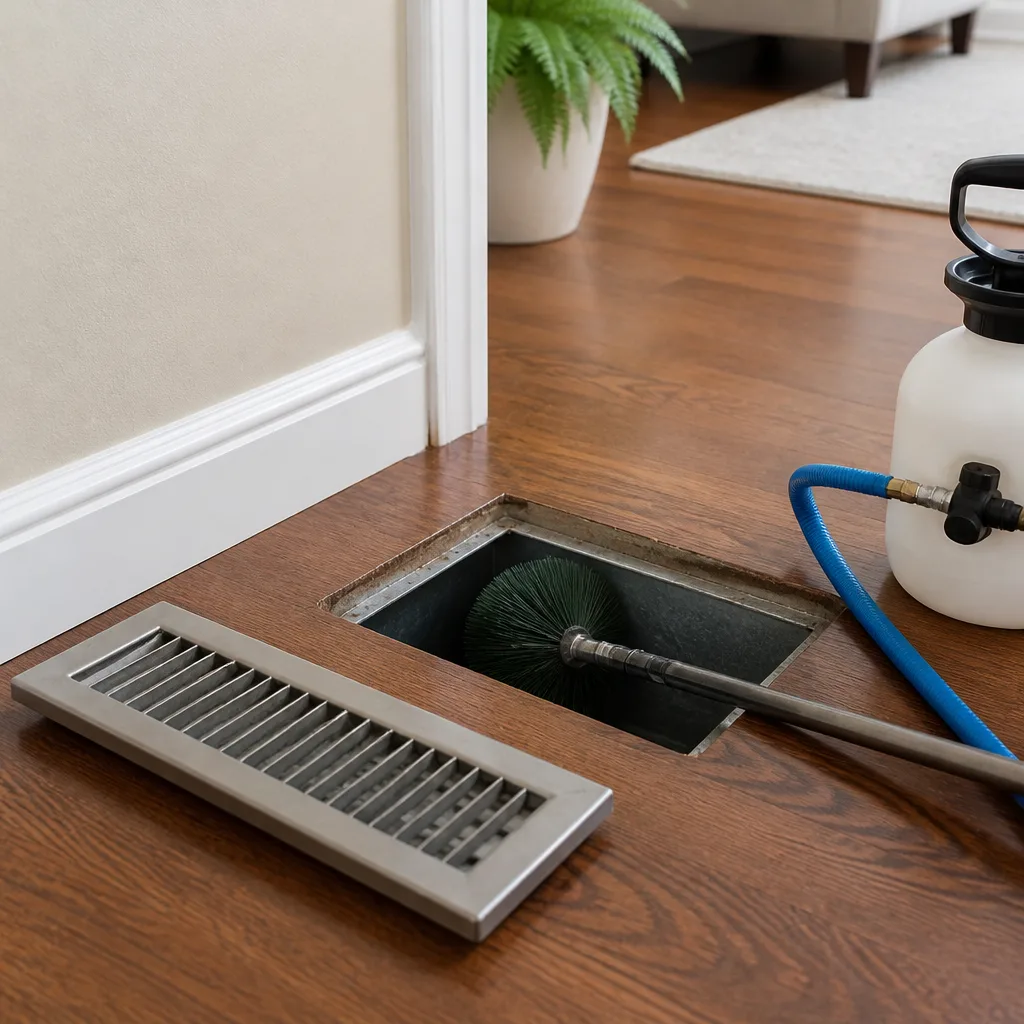 Sanitizing & deodorizing
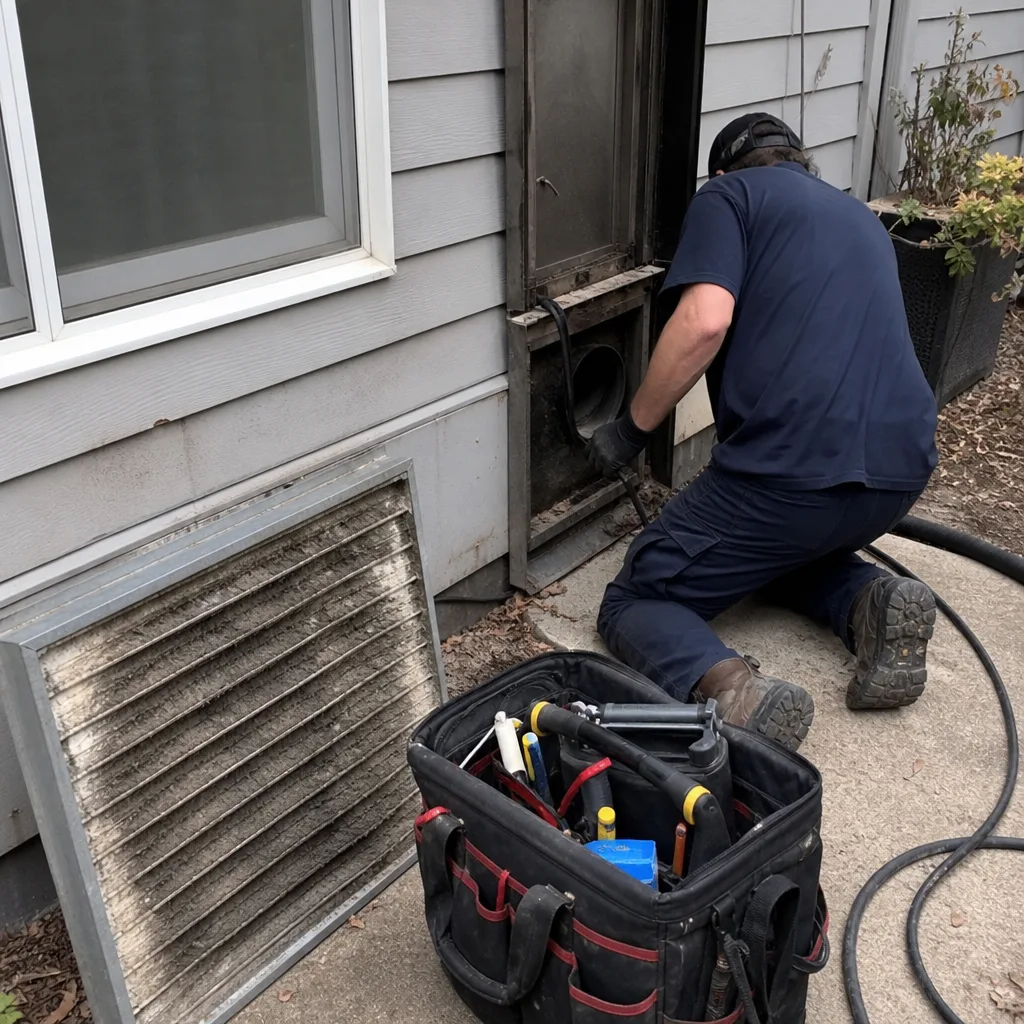
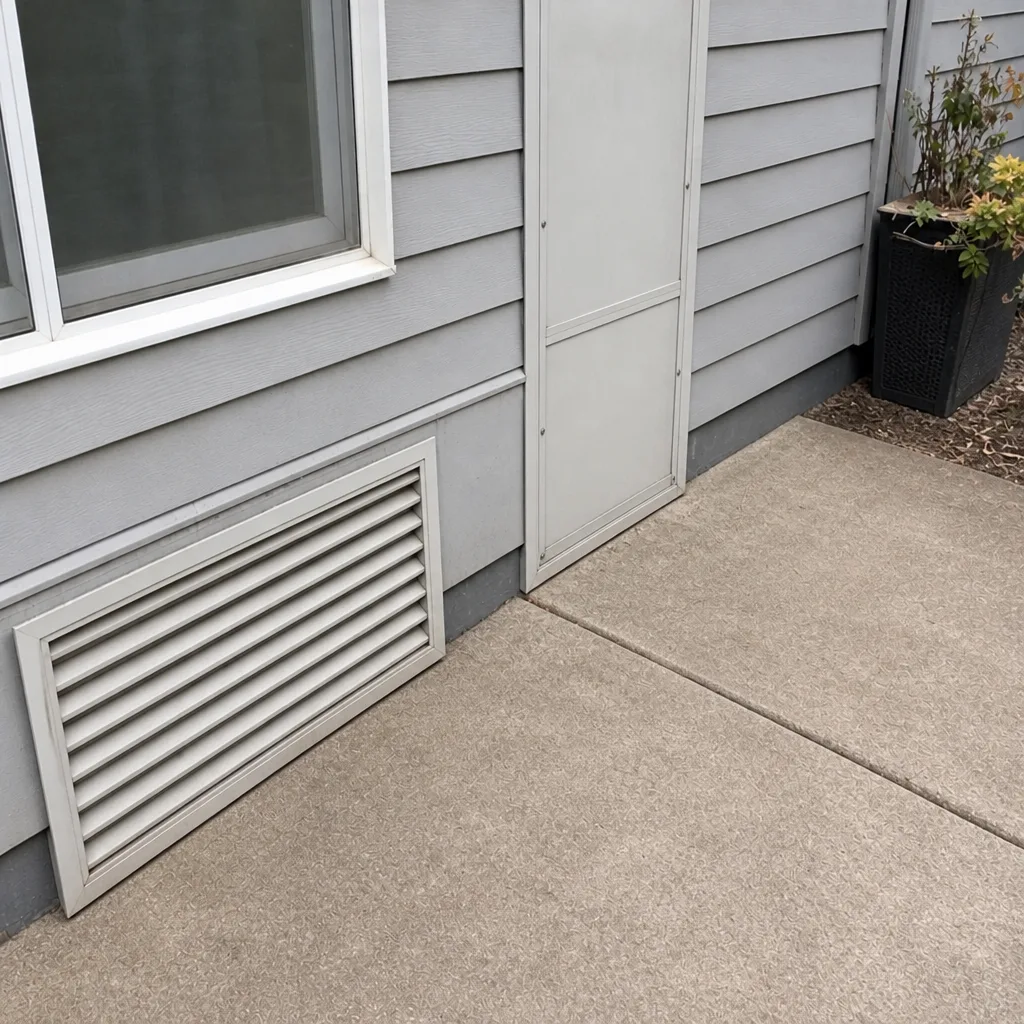
Whole-system duct and dryer vent check with before-and-after photos - you see exactly what came out of your vents
That "$99 whole-house special" is a bait ad - the real number appears once they are in your hallway, or the "clean" is a shop-vac at the register. We photograph the inside of your ducts before and after instead.
Air Duct Cleaning Permits, Codes & Inspections in Tallyn’s Reach, CO: What You Need to Know
Here’s the part of duct work almost nobody explains before the invoice: the cleaning itself needs no permit, but the upgrades homeowners bundle with it often do. If a contractor seals your ductwork, replaces a UV air purifier, or installs an ERV as part of an air-quality package and pulls no permits, that work is invisible to future buyers and can void your HVAC warranty. The cleaning was legal. The extras were not. In Tallyn’s Reach, where many homes sit on tight lots with mechanical equipment tucked into closets and crawlspaces, the paper trail matters as much as the airflow. This guide walks the line between cleaning and regulated mechanical work, tells you which inspections Douglas County expects, and shows you what to keep on file.
Quick Answer
Air duct cleaning alone does not require a permit in Colorado. What does trigger permits and inspections is the work that often rides along with it: duct sealing with mastic or spray foam on supply and return systems, replacement of HVAC components, refrigerant work, electrical tie-ins for UV or air purifiers, and additions like ERVs or humidifiers. In Tallyn’s Reach, mechanical permits run through Douglas County, and the contractor performing regulated work has to hold the right Colorado license. Cleaning is unpermitted by nature. Repair, sealing, and equipment installs are not.
Styles & brands we work with
- Whole-home duct cleaning
- Dryer vent cleaning
- Camera inspection
- Sanitizing & deodorizing
Table of Contents
- What Colorado Mechanical Code Covers in Duct Work
- Where the Cleaning vs. Repair Line Sits
- Douglas County Jurisdiction: When Work Triggers an Inspection
- Licensing for Refrigerant, Electrical, and Venting Work
- How to Verify a Contractor Before They Touch Sealed Components
- Documentation to Keep for HOA Compliance and Future Disclosures
- What an Inspection Actually Looks At
- Common Mistakes to Avoid
What Colorado Mechanical Code Covers in Duct Work
Colorado’s mechanical code governs how ducted systems are built, connected, sealed, and vented. It is adopted state-wide in a model form and then administered locally, which means the rules you actually live under in Tallyn’s Reach come from Douglas County’s building department reading from the state code base. The code’s reach is specific. It covers duct material and gauge, how joints and seams are fastened and sealed, clearances to combustibles, return-air integrity, and the venting of combustion appliances.
What the code does not cover is the condition of the inside surface of your ducts on any given day. Nothing in the mechanical code says a homeowner must clean their ductwork, and no inspection is triggered by dirt. That distinction is the whole backbone of this guide. A technician can legally vacuum and brush a residential duct system without a permit because cleaning isn’t construction, alteration, or repair in the code’s sense.
Where homeowners get surprised is when cleaning reveals a problem that requires cutting in. Cracked flex duct in a Tallyn’s Reach attic, a crushed trunk line, disconnected joints behind a wall, or spray-foam or mastic sealing across a whole system: those move the job from maintenance into regulated mechanical scope. Once that happens, the work is supposed to be permitted and inspected on the same footing as any other duct installation.
Two details matter in practice. First, “sealed components” is a real category. If a contractor is working on sealed refrigerant lines, combustion vent connections, or the sealed cabinet of an air handler, code and licensing expectations apply. Second, code compliance is about the final installed condition, not the process. A crew can clean without a permit, but they cannot legally leave modified duct assemblies in a state the code wouldn’t accept.
For the cleaning side of the work, our approach is to document condition as we go. If we find something that clearly crosses into repair scope, we flag it before anything is cut. That’s not a sales pitch; it’s the honest dividing line between air duct cleaning and duct repair, and homeowners deserve to know which one they’re buying.
Where the Cleaning vs. Repair Line Sits
The line is easier to hold if you think in terms of what changes. Cleaning removes material from a system that stays physically as it was. Repair, sealing, and installation change the system. The first needs no permit. The second usually does. Here’s how the categories break down:
- Cleaning (no permit): brushing and vacuuming supply and return ducts, registers, grilles, air handler interiors, and coil surfaces. Includes sanitizing a cleaned system.
- Duct repair (permit often required): reconnecting or replacing sections of duct, rebuilding a crushed or detached trunk, replacing flex runs, sealing large gaps in a way that alters the assembly.
- Duct sealing (permit depends on scope): spot-sealing small leaks during cleaning typically stays unpermitted; full-system mastic or spray-foam sealing of supply and return ductwork is a mechanical alteration and is usually permitted.
- HVAC component replacement (permit required): new air handlers, coils, blowers, or major controls.
- Air-quality additions (permit and/or license likely): UV purifiers, whole-home humidifiers, ERVs, and in-line filtration can trigger electrical or mechanical permitting depending on how they connect.
That last category is where we’ve seen the most confusion in Tallyn’s Reach. A homeowner buys an air-quality upgrade as part of a cleaning package, the contractor wires in a UV purifier on an existing circuit, and no one thinks about the electrical side. The cleaning was done properly. The electrical tie-in wasn’t. If the circuit was never inspected and later causes an issue, the homeowner carries it.
Our own practice is to keep the two jobs clearly separated on paper. Cleaning and sanitizing stand on their own. If a home needs air duct cleaning in Tallyn’s Reach plus a repair or sealing element, the repair scope is documented with photos and described in the estimate so everyone knows what kind of work it is. The crew doing the work holds up its end. The homeowner knows which parts are regulated.
Douglas County Jurisdiction: When Work Triggers an Inspection
Tallyn’s Reach is unincorporated Douglas County, so mechanical permits and inspections run through the county building department rather than a municipal office. There’s no separate city inspector for the neighborhood. That simplifies things, but it also means homeowners who are used to a city permitting process sometimes skip steps because there’s no obvious city counter to walk into.
Douglas County expects a mechanical permit when the work goes beyond maintenance. In plain terms, that means:
- Replacing or adding HVAC equipment. New air handler, coil, furnace, boiler, or major venting changes.
- Altering duct systems in a way that changes their configuration. Adding runs, removing runs, replacing large sections of trunk, or reconfiguring a return.
- Full-system duct sealing where the sealing is part of a mechanical upgrade, not incidental to cleaning.
- New electrical connections for air-quality equipment such as UV purifiers, humidifiers, and exhaust fans, which can require an electrical permit separately.
- Gas appliance changes or re-venting of a combustion appliance, which is a separate and much more tightly regulated scope.
An inspection, when it’s required, checks that the install matches the permit and the code: connections, clearances, venting, sealing, and the electrical tie-in if one was part of the scope. It doesn’t check the cleanliness of your ductwork because cleanliness isn’t code.
One practical point for Tallyn’s Reach: several homes sit on lots where the furnace or air handler is in a tight closet, attic, or crawlspace. Those configurations sometimes make the inspection harder to schedule because of access, and they’re also the ones where a repair that starts small can expand. When our technicians find something in an awkward location during HVAC cleaning, we photograph it, measure the scope, and tell the homeowner whether the fix is maintenance-grade or permit-grade. That’s the decision point.
Licensing for Refrigerant, Electrical, and Venting Work
Three licensing tracks sit underneath the work homeowners rarely separate out. Any one of them being skipped is what turns a well-intentioned duct job into an unpermitted repair.
- Mechanical / HVAC licensing. Colorado licenses mechanical contractors, and duct repair and equipment installation performed under permit are expected to come from a licensed firm. Licensed and insured as Colorado requires is the baseline we expect from anyone touching sealed mechanical components, and it’s the standard we hold our own work to.
- Refrigerant handling. Work on the refrigerant circuit of a split system requires EPA Section 608 certification for the technician doing it, on top of the contractor license. This comes up if a “duct cleaning” visit turns into a coil replacement or an A/C diagnostic.
- Electrical. Wiring a UV purifier, humidifier, ERV, or new control typically requires an electrical permit and a licensed electrician, even if the mechanical contractor is the one coordinating the job.
- Combustion venting. Any change to how a furnace or boiler is vented requires mechanical licensing and, in many cases, inspection. Venting is where the safety consequences of shortcuts are most serious.
For a homeowner, the practical version of all this is a question you’re entitled to ask on the first call: what license do you hold for the specific work you’re quoting, and if there’s an electrical or gas element, who’s doing that part and under what permit? A legitimate contractor answers immediately. A crew that hesitates on that question is a crew to skip.
Our own structure keeps this clean. We handle cleaning, sanitizing, duct repair, and sealing as a specialist, we use licensed trades when the scope requires a permit or a separate license, and we never represent cleaning as a substitute for regulated work. That ordering keeps everyone protected. Our technicians have up to 14 years of experience with systems like these, which includes knowing exactly where the repair line falls.
How to Verify a Contractor Before They Touch Sealed Components
Verification takes ten minutes and it’s the single best thing a homeowner can do before signing. Here’s the sequence we’d run if we were hiring someone for our own home:
- Ask for the contractor’s license status and the license class that applies. “Licensed and insured” is a starting sentence, not a complete answer. Get the class.
- Check the license with the state. Colorado lets you look up contractor licenses through the state’s online lookup. Verify the legal business name matches the quote.
- Ask for the permit intent on regulated work. If the quote includes sealing, repair, or equipment installation, ask directly: “Will you pull a mechanical permit for this?” A clean yes is what you want. A shrug is a no.
- Ask who handles electrical and gas scopes. If there’s a UV purifier or a humidifier in the package, name the electrician, or ask who the electrical permit will be under.
- Get the scope in writing, including the cleaning-vs-repair split. The estimate should say which line items are cleaning, which are repair, which are equipment, and what gets inspected.
- Confirm insurance on request. General liability and workers’ comp are standard. A contractor who can’t produce a certificate on request is one to skip.
- Ask for before-and-after photos as part of the deliverable. Photos tell you what was actually cleaned. They also help you show any work later.
One thing we’d flag specifically for Tallyn’s Reach: many homes here have finished basements and attic equipment where duct runs pass through multiple conditioned zones. That raises the chance that any sealing or repair touches more than one assembly. The more zones a job touches, the more likely it crosses into permit scope. A contractor who understands that will ask about the home configuration before quoting.
Documentation to Keep for HOA Compliance and Future Disclosures
The paperwork you keep after a duct job has three audiences: you, your HOA if the neighborhood association has exterior or equipment rules, and the buyer’s inspector when you eventually sell. The first is the easiest. The other two are where homeowners under-prepare.
Here’s a short list of what to keep. It’s the same list we’d compile for ourselves after any work in a Tallyn’s Reach home:
- The written estimate and final invoice, itemized. Cleaning, repair, sealing, and equipment should be separate lines. This is your proof of what category each job was.
- Permit and inspection records for any work that required them. Inspection sign-off is the certificate that matters at resale.
- Before-and-after photos of the ductwork taken inside the system. These come from our Rotobrush rotary cleaning and Nikro HEPA-rated vacuum work, and they document condition before and after on every job.
- Manufacturer documentation for any equipment installed, including air-quality products. Warranty terms live here.
- Product spec sheets for filters, purifiers, and controls. Future buyers want to know what’s in the house.
- A dated service log. A running list of what was done and when. Two lines per service is enough.
For HOA compliance specifically, the practical rule is to check your community’s governing documents before any exterior equipment change. A new ERV or an outdoor unit replacement can fall under architectural review depending on the association. Cleaning and internal sealing do not, but it’s worth confirming that in writing so you’re not scrambling at closing. And for future disclosures, the item that most often goes missing is the inspection record for a mechanical job. Buyers’ inspectors ask for it, and a missing record can turn a solid job into a negotiating discount.
What an Inspection Actually Looks At
An inspection is not a quality review of your contractor’s workmanship in the general sense. It’s a code conformance check. The inspector verifies the installed condition against the permit and the mechanical code, and then signs off. Here’s what that looks like in practice for duct-adjacent work in Tallyn’s Reach homes:
- Duct connections and sealing: joints fastened and sealed to the code’s requirement, no gaps left at trunk and branch transitions.
- Support and clearances: duct runs supported at code intervals, clearances to combustibles maintained, no duct sagging into an attic or crawlspace path.
- Return-air integrity: returns connected and sealed so the system isn’t pulling from a crawlspace or garage.
- Equipment installation: air handler, coil, and controls mounted, wired, and vented per the permit.
- Electrical tie-in: separate electrical permit if one was required, inspected on its own track.
- Venting of combustion appliances: vent connections correct, clearances held, no shortcuts at the flue.
Note what’s not on the list: the interior cleanliness of the ducts. Cleaning is a maintenance activity, and no inspection is designed around it. That’s exactly why the split matters. If you hire cleaning only, there’s nothing to inspect. If you hire cleaning plus repair, the repair element is inspectable and should be inspected.
Two of the tools we rely on come into play around inspection prep. Our Nikro HEPA-rated vacuum keeps dislodged debris contained during the cleaning phase, and the Abatement Technologies equipment we deploy on elevated contamination scenarios lets us work carefully around equipment that’s about to be inspected. Cleaning around an installed, inspected system without disturbing it is part of the job, and it’s easier when the equipment is professional-grade rather than a repurposed shop vac.
One local detail worth knowing: several Tallyn’s Reach homes have attic air handlers, and attic access is often a narrow hatch. If the inspection requires getting to a component behind that hatch, make sure the contractor has accounted for it in the schedule. An inspection that gets rescheduled for access is a permit that sits open longer than it needs to.
Dryer Vent Cleaning and the Inspection Question
Dryer vent cleaning is its own category, and it’s worth two minutes here because homeowners often ask whether it’s bundled into the duct-cleaning permit discussion. It isn’t. dryer vent cleaning is a maintenance service with no permit track. The interesting part is when vent cleaning reveals that the vent itself is improperly installed: a flexible transition that’s too long, a run with too many elbows, or a termination that doesn’t meet code. Those are installation problems, and correcting them is a mechanical scope that may require a permit.
This is a real fire-risk category, not a compliance checkbox. A dryer vent that stays clogged is a genuine safety issue regardless of paperwork. When our crew cleans a vent and finds a routing problem, we document it and explain what a correct install looks like. The correction is a separate decision.
Common Mistakes to Avoid
- Assuming “no permit needed for cleaning” covers the whole quote. It covers the cleaning line only. If the estimate includes sealing, repair, or equipment, ask which of those is permitted.
- Letting a UV purifier or humidifier be wired in without an electrical permit. These add-ons look small, but the electrical tie-in is its own scope. Skipping the permit leaves an uninspected circuit in your home.
- Skipping the license check because the price was good. A low quote on regulated work is often a quote from someone who isn’t going to pull a permit. The price looks right until resale or a warranty claim.
- Not asking who handles the refrigerant side. If a “cleaning” visit morphs into a coil or A/C conversation, confirm the technician is EPA 608 certified before they touch the sealed system.
- Throwing away the permit and inspection records after closing. These are the documents a future buyer’s inspector will want. Keep them with the rest of your home file.
- Assuming the HOA only cares about the outside of the house. Equipment additions like an ERV can trigger architectural review depending on the association’s governing documents. Read the rules before the install, not after.
- Treating an inspection as a quality guarantee. An inspection confirms code conformance for the permitted scope. It does not confirm the interior of your ductwork is clean, and it doesn’t cover work that was never on the permit.
See the difference
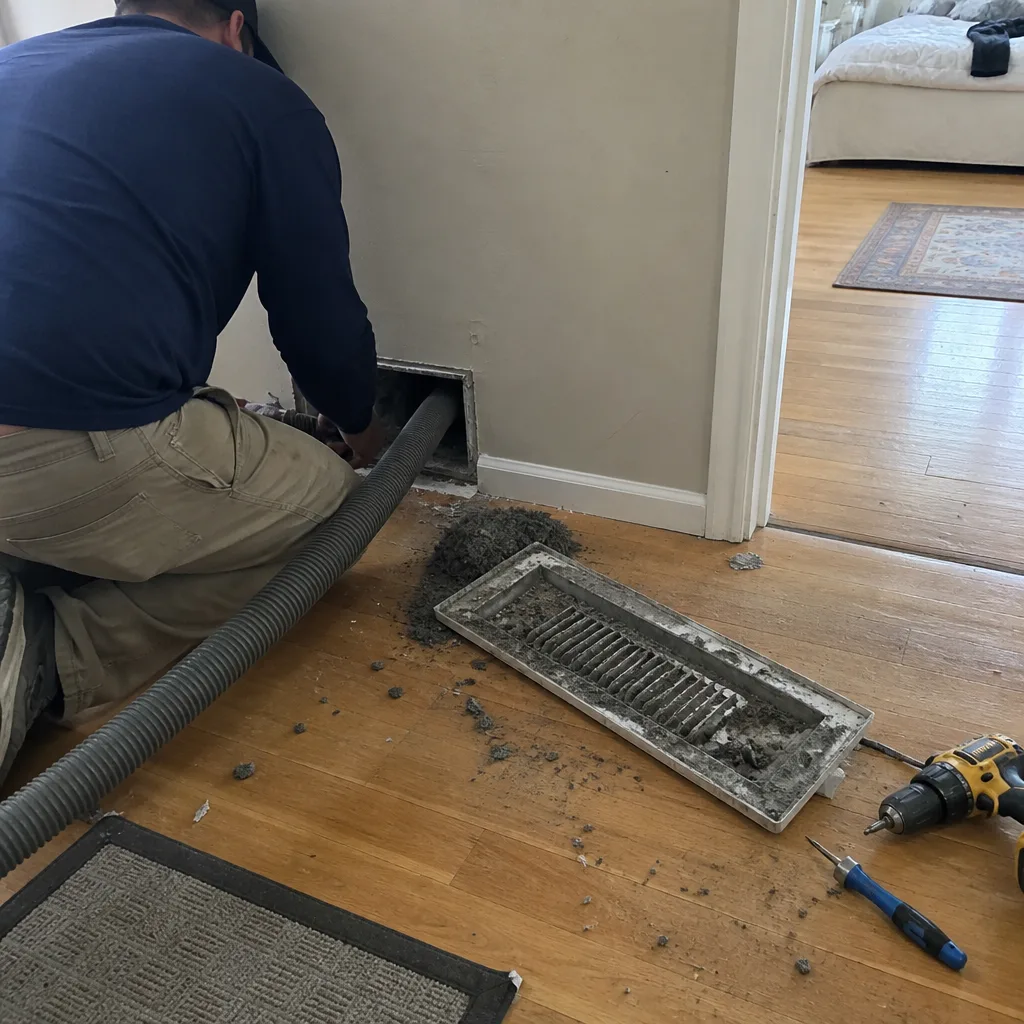 Before
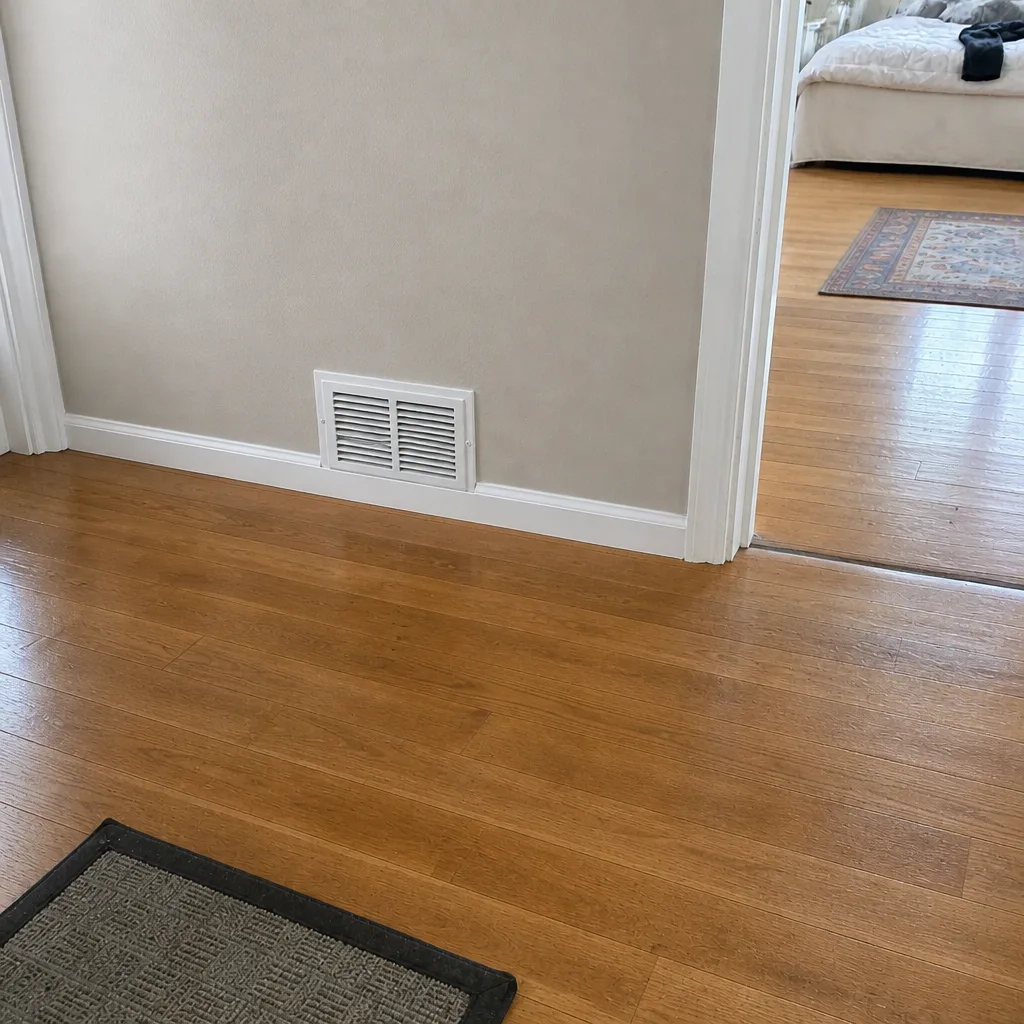 After
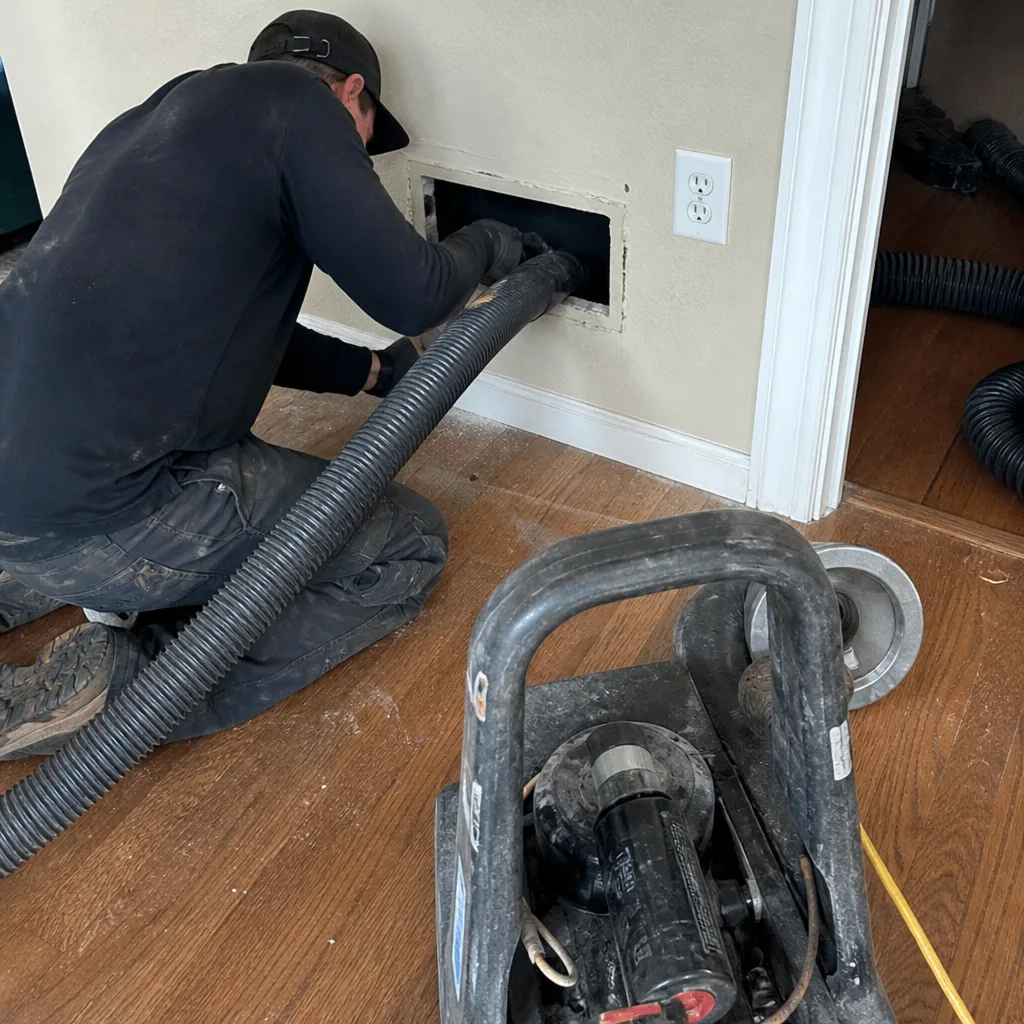 Before
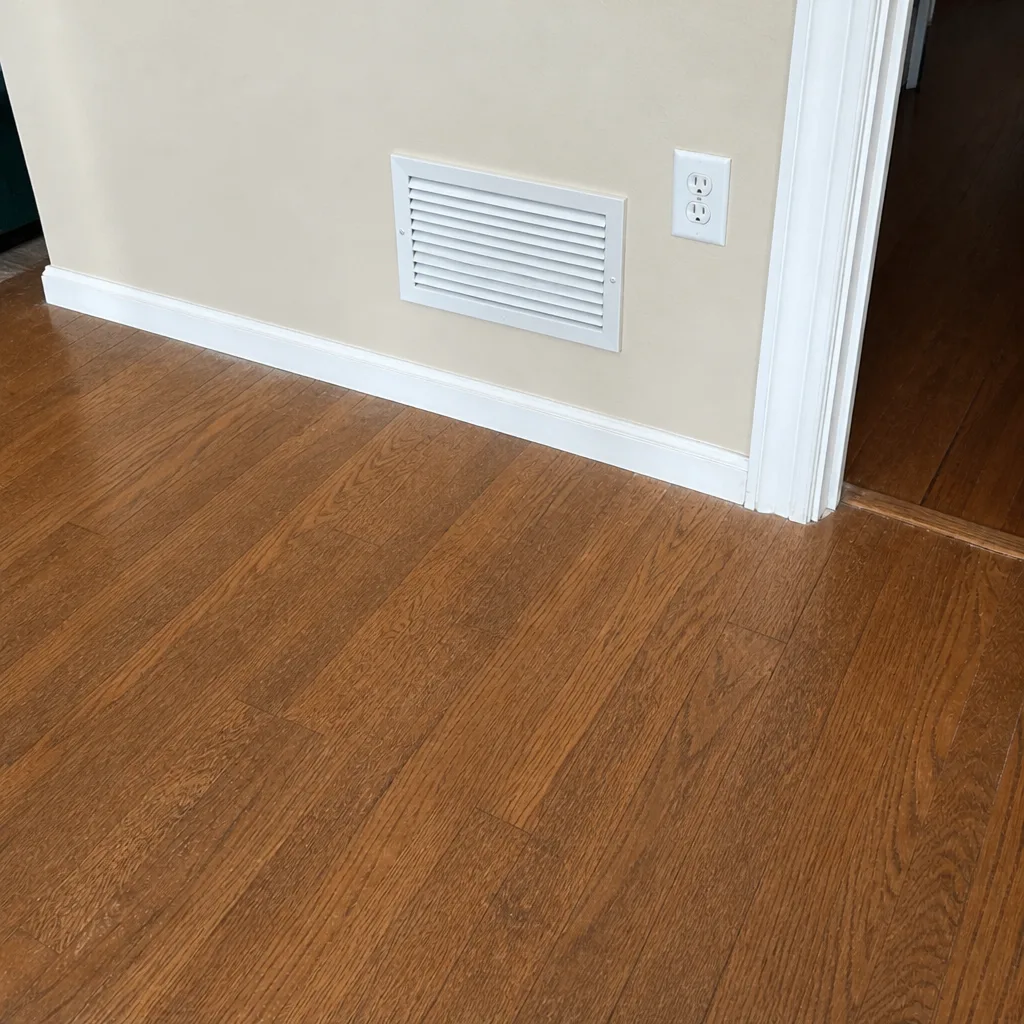 After
 Before
 After
When to Call a Professional
Call a professional when the scope crosses the cleaning line and you’re not sure where the line is. That includes: a contractor quoting duct sealing without mentioning a permit, visible damage to ductwork in an attic or crawlspace, a UV purifier or humidifier being added without an electrical plan, refrigerant or gas work bundled into a cleaning visit, or a home sale where the buyer’s inspector has asked for records you don’t have. Also call when the ductwork itself has never been serviced or has been disturbed by a renovation, because the cleaning is the part that can be scheduled with confidence and the repair conversation can follow.
Air Duct Cleaning Tallyn’s Reach offers free estimates in Tallyn’s Reach. We walk the home, describe what’s cleaning and what’s repair, and tell you plainly which elements need a permit. Call (855) 550-7311. We answer 24/7. Fast dispatch from 7am to 7pm, Sunday through Friday.
Frequently Asked Questions
No. Air duct cleaning does not require a permit in Tallyn’s Reach or anywhere else in Colorado. Cleaning removes material without changing the system, so no inspection is triggered. Permits come into play when the work also includes duct sealing at system scale, duct repair, HVAC equipment replacement, electrical tie-ins for air-quality products, or combustion venting changes. Call (855) 550-7311 for an exact quote on your scope; estimates are free.
Often, yes. Spot-sealing a few gaps during cleaning typically stays in maintenance scope, but full-system mastic or spray-foam sealing of supply and return ductwork is a mechanical alteration, and Douglas County treats it like any other mechanical change under permit. The scope drives the answer, so have the contractor state clearly in writing whether the sealing is part of a permitted mechanical job. Call (855) 550-7311 if you’re unsure which side of the line your quote falls on.
Ask for the license class and legal business name, then look both up through the state’s online contractor license lookup. For work involving the refrigerant circuit, ask whether the technician holds EPA Section 608 certification. For electrical tie-ins like UV purifiers, ask who the electrician is and whether an electrical permit will be pulled. A legitimate contractor answers all three on the call. Call (855) 550-7311 and we’ll walk you through what your specific job needs.
Keep five things: the itemized estimate and final invoice, any permit and inspection sign-off records, before-and-after photos of the ductwork itself, manufacturer documentation for equipment installed, and a dated service log. These documents serve your warranty claims, your HOA’s records if applicable, and the buyer’s inspector at resale. Duct cleaning without a permit leaves no inspection record to file, which is one more reason dropping repair work into the same visit without proper permitting is a mistake. Call (855) 550-7311 to schedule a free estimate and we’ll deliver photos with the work.
Cheaper quotes usually skip something you can’t see from the driveway: containment equipment, HEPA-rated vacuum, proper rotary cleaning, and documentation. They also tend to be quotes for cleaning only, with repairs and sealing left as an unpermitted add-on later. That’s a licensing and liability question, not just a quality one. Ask any contractor what equipment they’ll use and whether the quote covers the full system. Call (855) 550-7311 for an exact quote on a thorough job, and we’ll show our equipment and process up front. Estimates are free.
Cleaning done to the system without altering it typically won’t, but any repair, sealing, or equipment installation that runs outside the manufacturer’s requirements or Colorado mechanical code can create a warranty problem. That’s the real risk of unpermitted work: the installed condition may not match what the manufacturer permits, and the warranty language often references code-compliant installation. Keep your records organized and confirm the scope split in writing before work starts. Call (855) 550-7311 for an exact quote and a clear scope on your home.
The Bottom Line
Cleaning your ductwork needs no permit. Repairing it, sealing it at scale, adding equipment, or wiring in air-quality upgrades does. In Tallyn’s Reach, that difference runs through Douglas County’s mechanical permitting process, and it also determines whose license needs to be on the job and what records land in your home file. The work isn’t complicated once the lines are clear. Cleaning stands on its own; regulated work needs a permit, an inspection, and the right license. Getting that ordered correctly protects your warranty, your disclosures, and the next buyer. We do the cleaning side with professional-grade equipment including Rotobrush and Nikro, deploy Abatement Technologies gear where contamination is elevated, and integrate Aprilaire and Honeywell products when air quality needs to improve as part of the same work.
Get in touch with Air Duct Cleaning Tallyn’s Reach for a free estimate in Tallyn’s Reach. We’ll walk the home, explain what’s cleaning and what’s repair, and tell you exactly which elements need a permit. Call (855) 550-7311. We answer 24/7. Fast dispatch from 7am to 7pm, Sunday through Friday. Whether you’re booking a first cleaning, scheduling a pre-sale inspection-readiness walkthrough, or sorting out what an earlier contractor did or didn’t permit, we’ll give you straight answers before anyone touches your system.
Written by the team at Air Duct Cleaning Tallyn’s Reach.