
Last updated November 24, 2026
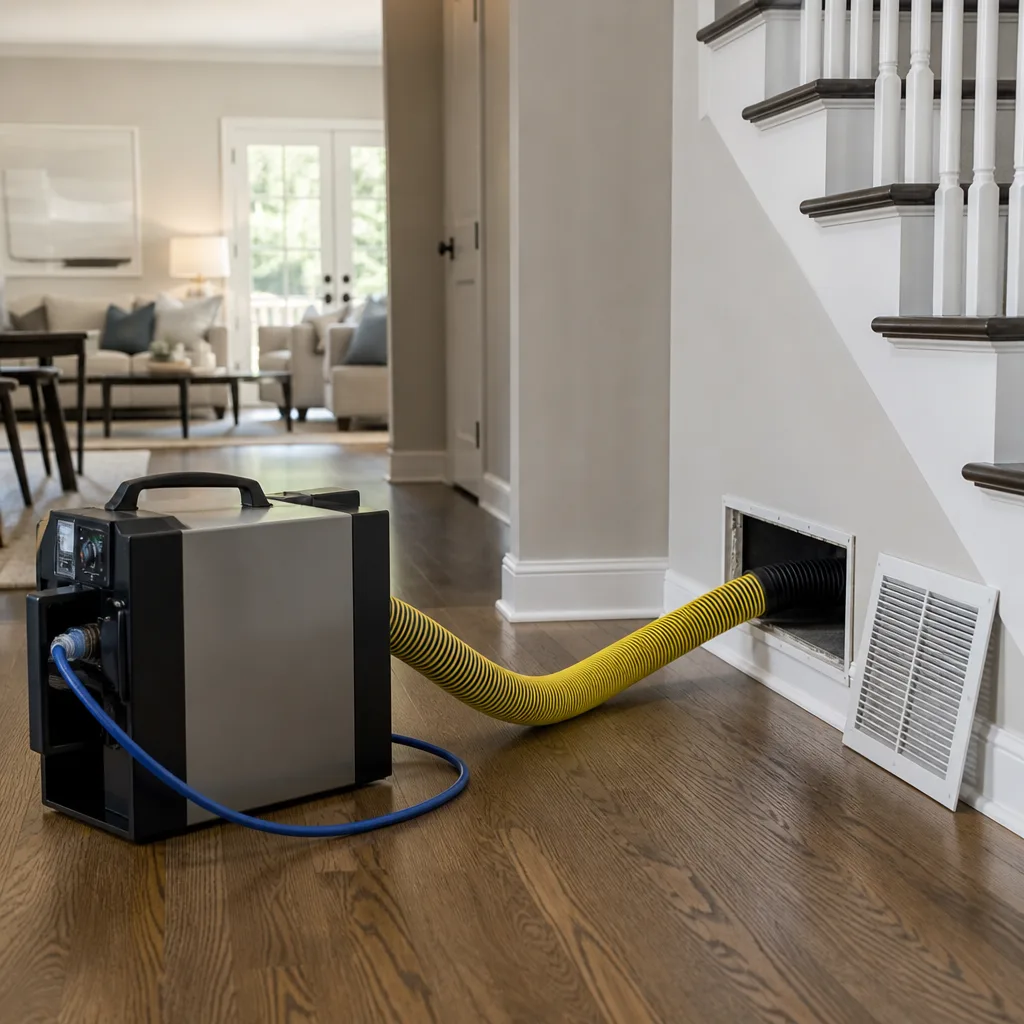 Whole-home duct cleaning
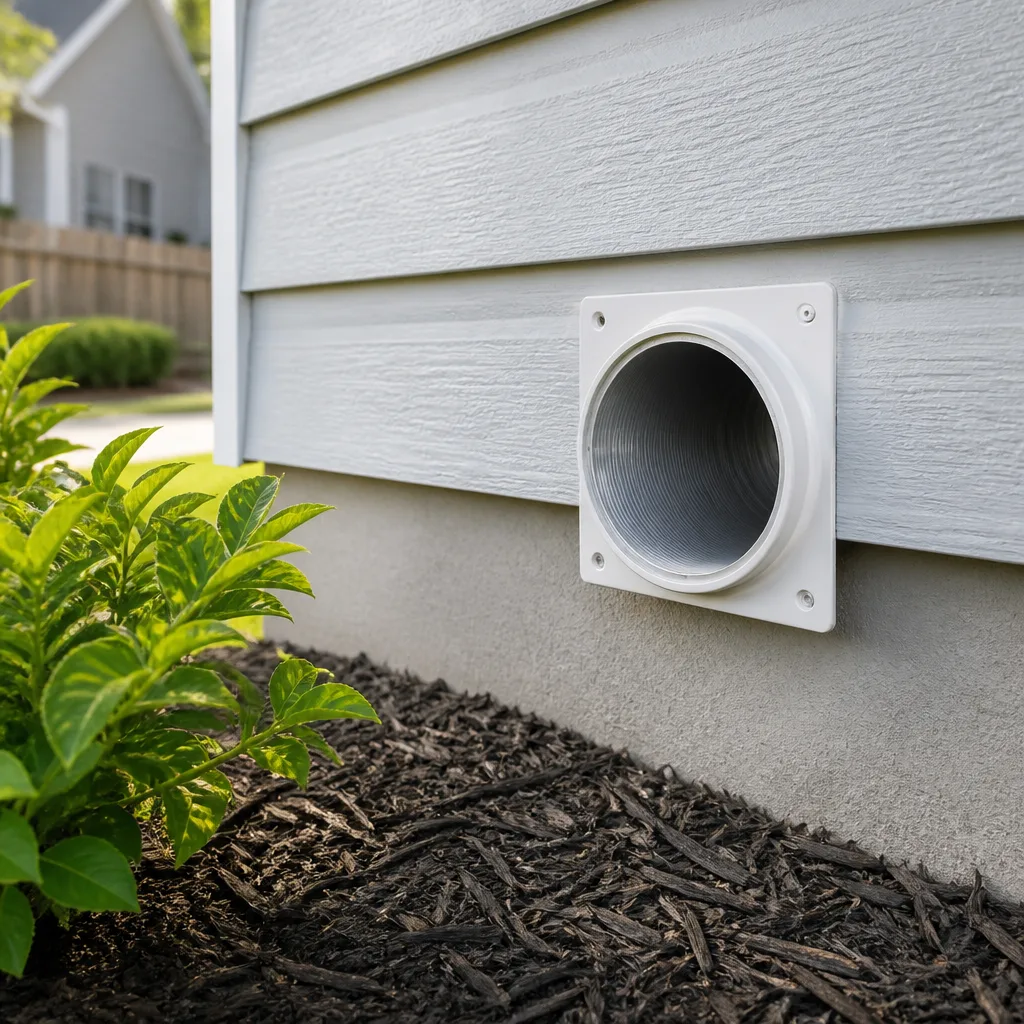 Dryer vent cleaning
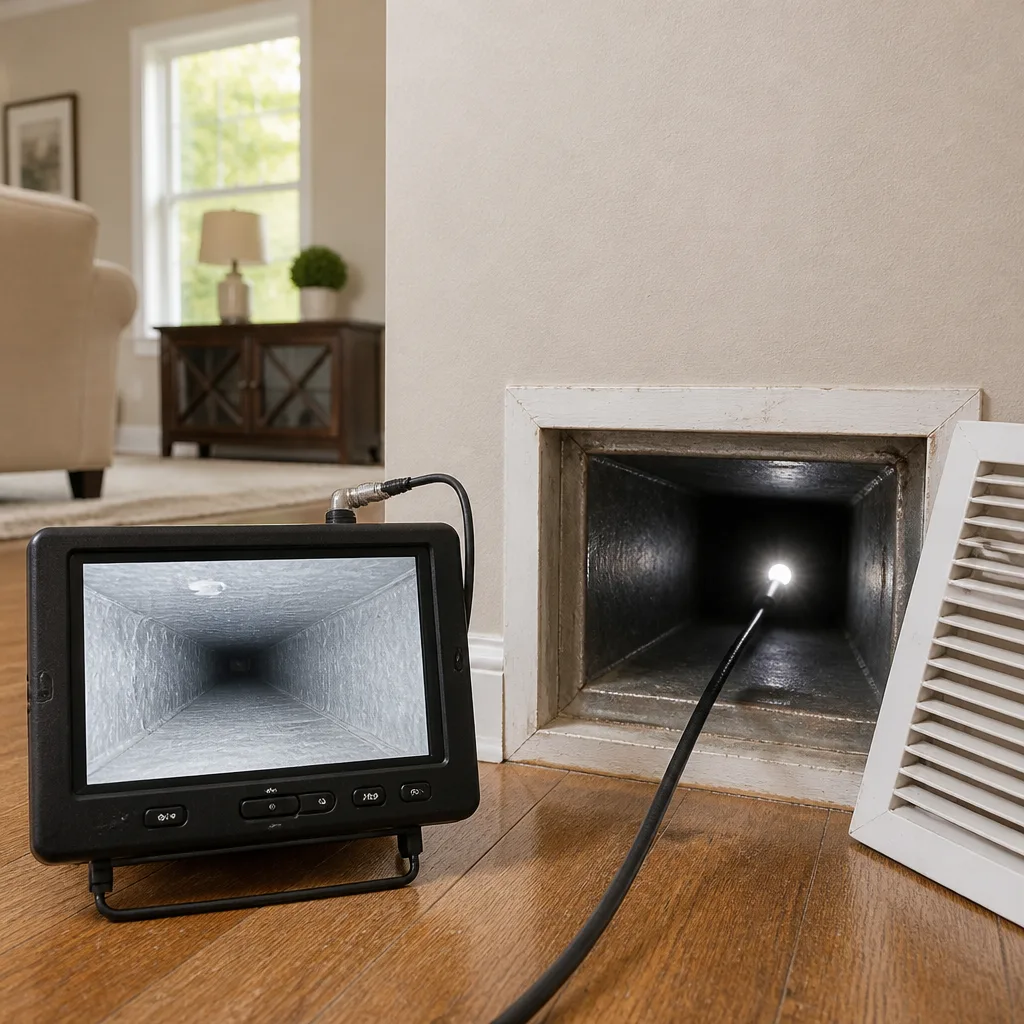 Camera inspection
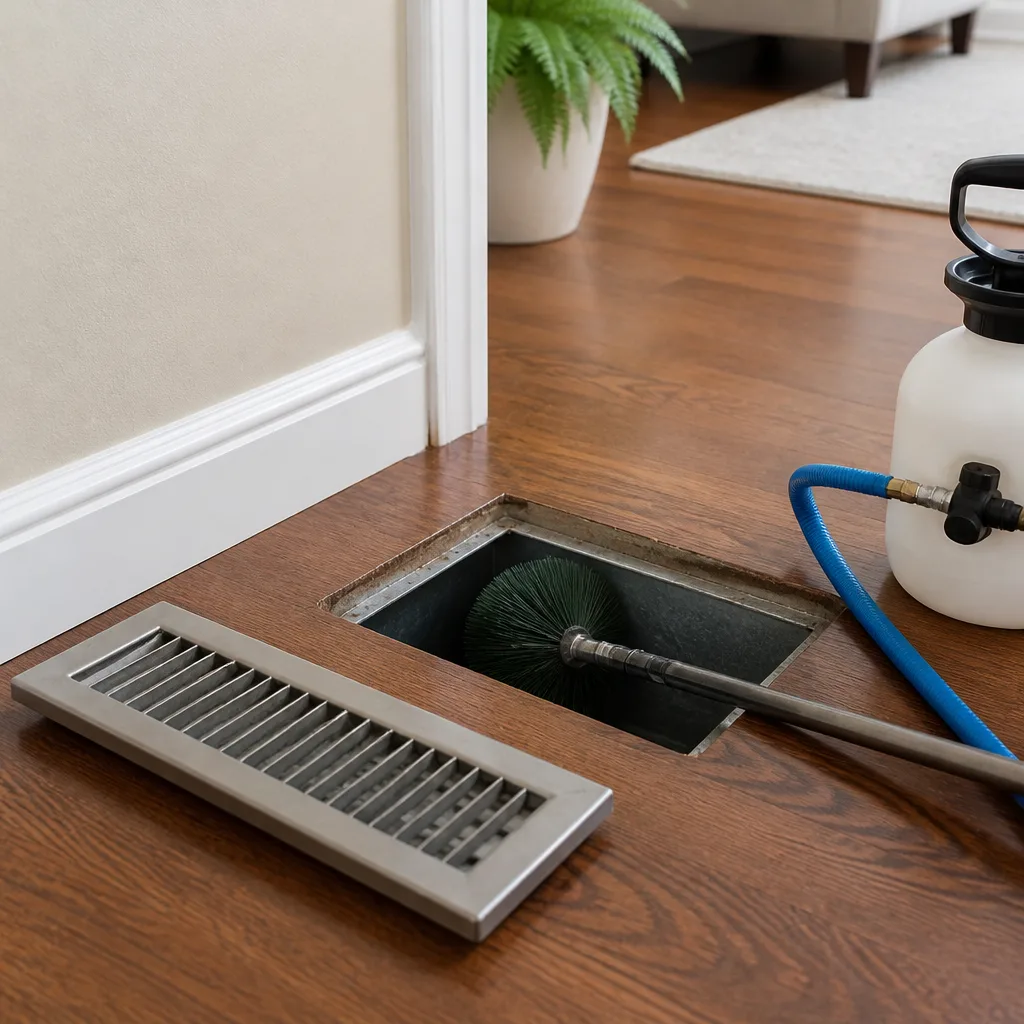 Sanitizing & deodorizing
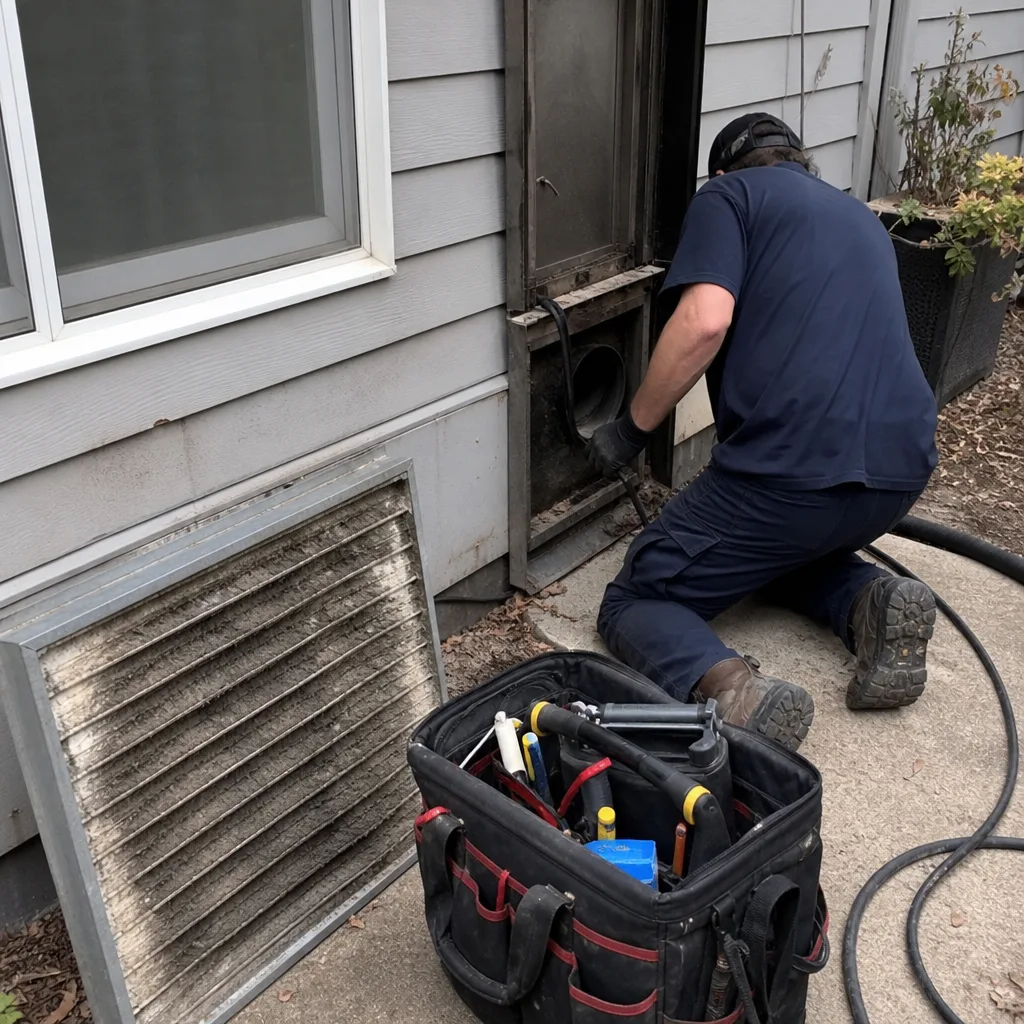
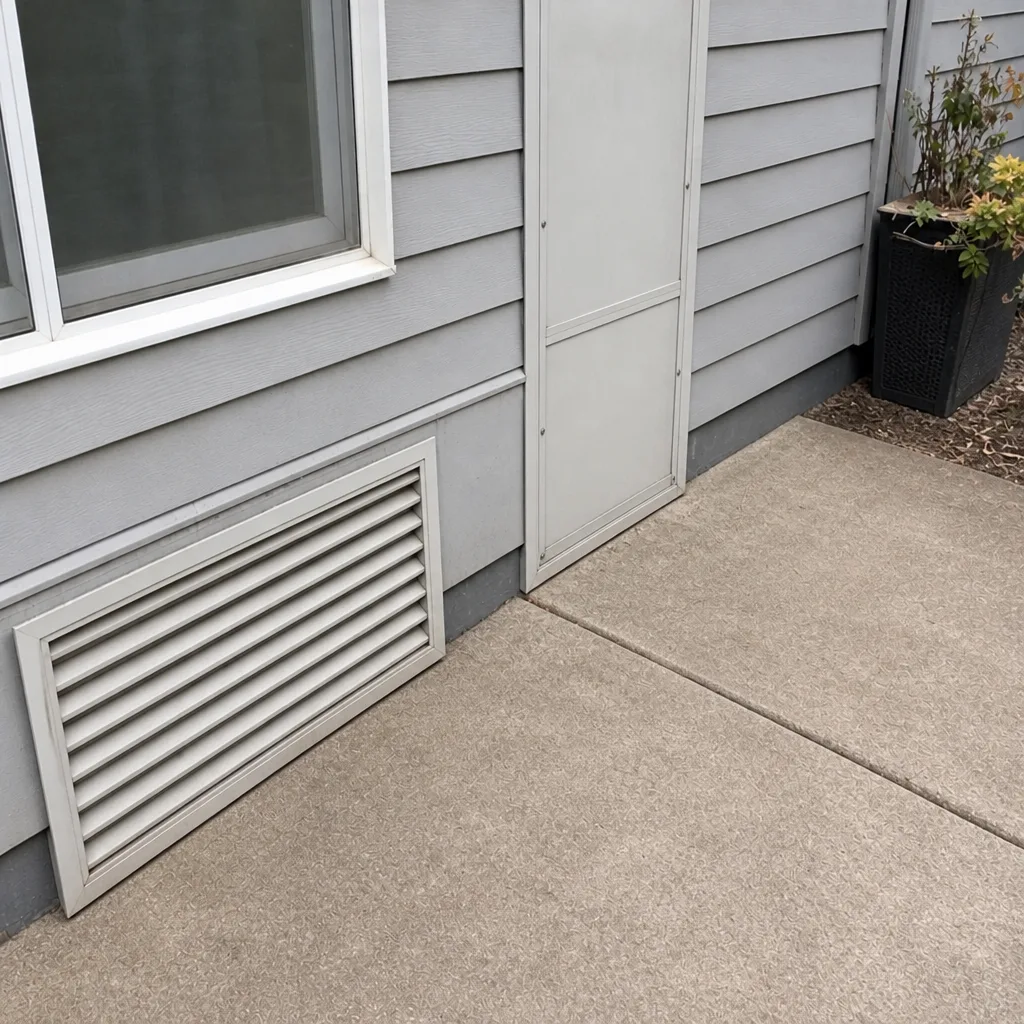
Whole-system duct and dryer vent check with before-and-after photos - you see exactly what came out of your vents
That "$99 whole-house special" is a bait ad - the real number appears once they are in your hallway, or the "clean" is a shop-vac at the register. We photograph the inside of your ducts before and after instead.
Air Duct Cleaning Troubleshooting in Tallyn’s Reach: Common Problems and How to Fix Them
If you’ve had your ducts cleaned twice in three years and still notice dust settling on surfaces within days, the problem isn’t cleaning frequency. It’s an undiagnosed breach in the duct system pulling unconditioned air from your crawlspace or attic. Cleaning a leaking duct system is like mopping a floor while the tap keeps running. Most homeowners in Tallyn’s Reach troubleshoot the symptom (dust, weak airflow, musty smell) instead of the source. This guide maps each symptom to its actual cause so you stop treating effects and start fixing sources. We’ll cover how to distinguish dirty ducts from leaking ones, why a single weak register usually means something specific, what post-cleaning odors actually tell you, and the local climate factors at Tallyn’s Reach elevation that accelerate certain failures.
Quick Answer
Most persistent duct problems in Tallyn’s Reach fall into one of three categories: leakage at joints, boots or flex connections; airflow imbalance from a collapsed or kinked flex duct section; or contamination on the evaporator coil or duct liner that cleaning alone won’t address. The right fix depends on which one you have – and the diagnostic step (a tissue test, a static pressure reading, a visual inspection at the plenum) tells you which. Cleaning is the answer only when the problem is actually dirt.
Styles & brands we work with
- Whole-home duct cleaning
- Dryer vent cleaning
- Camera inspection
- Sanitizing & deodorizing
Table of Contents
- How Do You Tell a Dirty Duct Problem from a Leaking Duct Problem?
- Why Is Airflow Weak at One Register But Fine Everywhere Else?
- What Does a Musty Odor After Cleaning Actually Mean?
- How Does Tallyn’s Reach Climate and Elevation Affect Your Ducts?
- When Is a Register Adjustment Enough, and When Do You Need a Redesign?
- What Should a Real Duct Cleaning Actually Include?
- When Repair and Sealing Beat Cleaning Alone
- How Do You Keep the System from Re-contaminating?
How Do You Tell a Dirty Duct Problem from a Leaking Duct Problem?
The short answer: dirt problems get better with cleaning; leak problems get better with sealing. The two look similar from the living room, which is why so many homeowners pay for a second cleaning that doesn’t help. Two field tests separate them.
The tissue test
Hold a single-ply tissue against the grille of a supply register while the system runs. If the tissue is pulled tight and stays flat against the grille, airflow at that register is healthy and your issue is probably upstream or a leak somewhere else in the run. If the tissue flutters loosely or falls, that register is starved. Now repeat the test at a return grille. A return that won’t hold a tissue usually points to a blockage or a disconnected return path – not dirty supply ducts.
The static pressure drop test
This one needs a manometer and a trained technician, but the concept is simple. A well-designed residential system runs within a range of total external static pressure; a professional measures pressure before the blower and after it. When the number sits well outside the expected range for the equipment, something in the duct system is restricting it – undersized returns, crushed flex, or a filter that’s too dense for the blower. When the number is normal but the home is still dusty, the culprit is usually leakage: unfiltered air entering through gaps at boots, plenum seams, or disconnected flex collars.
- Dirt problem signs: visible debris at supply grilles, dust trails from diffusers, and symptoms that improve noticeably right after cleaning.
- Leak problem signs: dust returns within a week or two, pressure readings outside the expected range, and a persistent musty or “outside” smell near certain rooms.
- Both at once: the most common situation in Tallyn’s Reach. Clean first, then seal – because cleaning a leaking system just gives the leak a clean surface to re-contaminate.
This is why we lead every job with a diagnostic pass, not a vacuum. Professional-grade equipment like the Rotobrush rotary system and Nikro HEPA-rated vacuum matters here: it lets us inspect, agitate, and contain debris in one pass rather than guessing. For a fuller walkthrough of what a proper cleaning sequence looks like, see our page on air duct cleaning.
Why Is Airflow Weak at One Register But Fine Everywhere Else?
In our experience, weak airflow at a single register almost never means debris buildup in that run. A collapsed flex duct section, a kink where flex was pulled too tight around a joist, or a separated collar at the boot is the more likely cause. Flex duct collapses when it’s installed with too sharp a radius or when it’s been compressed against framing; a kinked run can lose most of its capacity even when every other branch is perfect. That’s a mechanical problem, and no amount of cleaning will open a physically pinched duct.
Here’s how to narrow it down before you call anyone:
- Close every other supply register in the house and run the system. If the weak register improves dramatically, the problem is distribution (the system is balanced badly and one run is starved). If it barely changes, the run itself is restricted.
- Check the register boot and the first few feet of visible flex. Kinks, crushed sections, and disconnected collars are often visible from a basement, crawlspace, or attic access.
- Confirm the filter is clean and correctly sized. A dense filter on an undersized return starves the whole system, though a single-run symptom points back to that run.
- Ask for a static pressure reading. A technician can tell you which branch is underperforming and whether the trunk or the branch is at fault.
In Tallyn’s Reach, many homes have longer attic duct runs than the original layout assumes because additions and finished basements get tied into the same trunk. A branch that was sized for one room now supplies two, and the result is a chronically weak register. That’s a design issue, not a cleaning issue.
What Does a Musty Odor After Cleaning Actually Mean?
A musty smell that lingers after a cleaning usually means one of two things: biological growth on the evaporator coil, or degradation of the duct liner itself. They’re handled very differently, which is why a musty odor needs diagnosis rather than a second cleaning.
Mold on the evaporator coil
The coil sits wet for much of the cooling season, and that damp surface is where growth tends to start. The smell enters the airstream downstream of the filter, so it appears at every register. The fix is coil cleaning and proper drainage (making sure the condensate pan drains fully and the coil dries between cycles), not duct cleaning. If your technician cleaned the ducts but didn’t clean the coil, the smell will return.
Duct liner degradation
Older duct systems sometimes have interior fiberglass liner. Over time, moisture and airflow break the liner down, and the surface becomes a rough mat that traps dust and stays damp. That’s not surface dirt – it’s a failing material, and it needs to be remediated or the affected sections replaced. Cleaning a degraded liner can actually make things worse by loosening fibers into the airstream. Elevated scenarios like this are where Abatement Technologies equipment earns its keep: it’s built for containment and removal of spores and particulate in serious contamination cases, not just routine dust.
- Smell is strongest near the air handler: likely the coil.
- Smell is strongest at certain rooms and fades elsewhere: likely a damp section of duct or a leaking run pulling humid attic air.
- Smell appeared right after cleaning: ask whether the coil was cleaned, whether sanitizing was done with a product suited to the duct material, and whether the system was left wet.
If the root cause is moisture, the answer is often air-quality and humidity control, not more cleaning. We work with Aprilaire and Honeywell solutions for exactly this reason – filtration and humidity corrected at the source prevent the problem from recurring.
How Does Tallyn’s Reach Climate and Elevation Affect Your Ducts?
Tallyn’s Reach sits at roughly 6,300 feet, and that matters for your ductwork more than most homeowners realize. The combination of dry winters, strong afternoon summer storms, and the daily temperature swing at this elevation stresses duct systems in ways that flatland homes don’t experience.
Dry winters
Low winter humidity shrinks wood framing and the materials ducts are attached to. Joints that were sealed tight in a more humid season open up as the house dries out, and small gaps at boots and plenum seams grow. That’s one reason a home can feel dustier in January than in July even when nothing has changed. It’s also why duct sealing in Tallyn’s Reach is worth doing on a schedule rather than once: the building moves, and the seal has to move with it.
Afternoon storms
Summer afternoon storms bring sudden pressure changes and wind-driven rain. In an attic duct system, that can push water vapor into poorly sealed sections and into flex connections. Any leak in the attic draws attic air into the living space – and attic air in Tallyn’s Reach carries whatever’s in the insulation, which is exactly what you don’t want circulating through the rooms.
What to check
- Look at the attic or crawlspace side of the plenum and the boots during a cold snap: hairline gaps that opened with the season are the usual culprits.
- Feel for cool air escaping at seams while the system runs – a hand near the trunk will find most leaks.
- Check that exterior duct runs (if any) are insulated and sealed before winter, since the temperature swing at this elevation magnifies loss.
For a complete look at how HVAC cleaning and duct sealing pair up in this climate, see our HVAC cleaning services.
When Is a Register Adjustment Enough, and When Do You Need a Redesign?
The rule of thumb: if the room was once comfortable and isn’t now, adjust. If the room has never been comfortable, that’s a design problem. A register adjustment (opening a supply, closing a return, balancing dampers) works when the system was sized correctly but is simply out of balance. A redesign is warranted when the trunk or branch sizing can’t deliver the airflow a room needs no matter how the dampers are set.
In Tallyn’s Reach, the second scenario is more common than homeowners expect. Homes built with finished basements and later additions often have a branch that was sized for the original square footage but now serves three rooms. No amount of damper tweaking will fix that – the duct needs more capacity or a pressure-balanced redesign.
- Adjust the register when: the room is a few degrees off, the change happened gradually, and the static pressure readings are within range.
- Redesign when: the room has never been right, static pressure is high on the branch, or the total system pressure suggests the trunk is undersized for the load.
- Call a professional when: you don’t know which of the two you have. The measurement is cheap and prevents replacing the wrong thing.
A pressure-balanced redesign doesn’t always mean ripping out ductwork. It can mean adding a properly sized return, resizing a branch, or installing a balancing damper with a documented setting. What it never means is guessing.
What Should a Real Duct Cleaning Actually Include?
A genuine cleaning is a process, not a pass with a vacuum. If the crew arrives with a shop vac and a brush, that’s not duct cleaning – that’s surface dust removal that will be back within weeks. Here’s what a thorough cleaning looks like, and how to tell the difference.
- Containment first. A HEPA-rated vacuum like the Nikro systems we use creates negative pressure in the ductwork so dislodged debris can’t escape into your living space.
- Agitation on every run. The Rotobrush rotary system drives a brush and air whip through each branch, loosening the dust film that clings to the duct walls. Without agitation, a vacuum can’t remove material that’s stuck.
- Coil and air handler. If the coil isn’t cleaned, the system keeps pulling contaminants past a dirty surface. This is the step most discount crews skip.
- Registers and grilles removed and cleaned. The dust on the inside of a supply grille is part of the system.
- Before-and-after photos of your own ducts. Not stock images. Your system, documented.
- Containment teardown and a walkthrough. We show what was removed, where it came from, and what condition the system is in.
Air Duct Cleaning Tallyn’s Reach handles all five service lines – cleaning, sanitizing, HVAC cleaning, duct repair and sealing, and air quality – so the same team can address what the inspection finds without sending you to a second vendor. That’s what “full-system” means in practice: one process, one diagnosis, one set of results. For the technical case for each step, our main page on air duct cleaning in Tallyn’s Reach goes deeper.
When Repair and Sealing Beat Cleaning Alone
Cleaning removes what’s already in the ducts. Sealing prevents new contamination from entering. If your ducts draw from an unsealed crawlspace or attic, cleaning alone won’t hold unless the leaks are sealed. In Tallyn’s Reach, where the dry-winter/wet-summer swing works joints loose, this is the most commonly skipped step.
What sealing addresses
- Gaps at boot-to-floor and boot-to-wall connections
- Plenum seams and the connections to the air handler
- Flex collar connections where flex meets metal
- Attic and crawlspace penetrations where unconditioned air can be pulled in
Sealing with mastic and mesh on accessible seams (and appropriate tape on flex collars, never plain duct tape) closes the paths that bring attic air, insulation fibers, and unconditioned air into the airstream. It also stops conditioned air from leaking out before it reaches the room. On the Tallyn’s Reach side, that’s a meaningful difference in efficiency and in how clean the system stays.
We treat repair and sealing as its own service line for a reason. Guardsman duct sealing in Tallyn’s Reach is often the difference between a system that stays clean for years and one that needs cleaning again the following season, because it addresses the breach instead of the symptom. If your inspection finds a disconnected run or a crushed section, sealing isn’t the fix – the duct section needs repair or replacement first.
How Do You Keep the System from Re-contaminating?
Once the ducts are clean and sealed, the schedule that keeps them that way is simple. The goal is to stop contaminants before they enter the airstream and to catch new leaks before they grow.
- Change the filter on the right cadence. A 1-inch filter should be checked monthly during heavy use; a thicker media filter can go longer. If your filter is dense enough to restrict airflow, it’s too dense for a system without a designed static pressure margin.
- Keep returns clear. Blocked returns starve the system and raise static pressure, which forces leaks to grow.
- Have the system inspected at change of season. Spring and fall are when most new leaks show up in Tallyn’s Reach, because the seasonal dry-out and the summer storm cycle are what move the building.
- Watch for the warning signs. A return of visible dust within a few weeks, a musty odor, or a register that suddenly weakens is an early signal – not a reason to schedule another cleaning.
- Address the source. If the issue is filtration or humidity, Aprilaire and Honeywell equipment can correct it at the source so the ducts stay cleaner between cleanings.
- Don’t skip related systems. A dryer that vents into a lint-packed line is a separate problem with its own maintenance cadence; see dryer vent cleaning for what that looks like.
Common Mistakes to Avoid
- Cleaning when the real problem is a leak. Dust that returns within a week or two is a leak sign. Cleaning a leaking system gives the leak a clean surface to re-contaminate.
- Ignoring the air handler and coil. A cleaned duct system connected to a dirty coil stays contaminated. In Tallyn’s Reach, this is the most common reason a “just cleaned” system smells musty again.
- Choosing a quote on price alone. A quote that doesn’t include coil cleaning, containment, or photos isn’t a comparable quote – it’s a smaller job.
- Assuming a weak register means dirty ducts. A starved register is usually a mechanical issue (a kinked flex run or a badly balanced branch), not debris.
- Skipping the attic and crawlspace inspection. Leaks at the plenum and boots are invisible from inside the house but are where the contamination usually enters.
- Over-sealing the house while leaving ducts open. A tight home with leaking ducts pulls from wherever it can – sealing the ducts is the other half of the job.
- Treating the dryer vent as separate. A lint-clogged dryer vent is a fire risk independent of the ducts; check it on the same schedule as the rest of the system.
See the difference
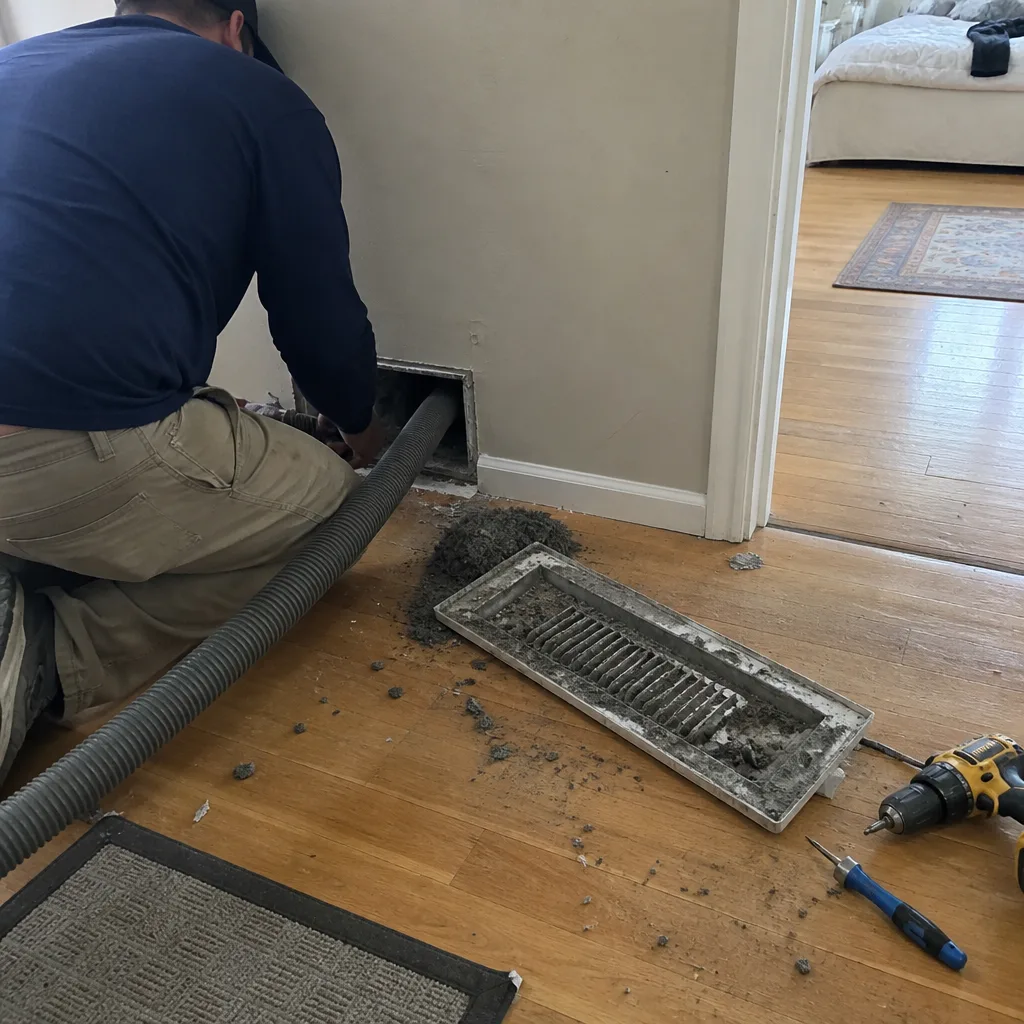 Before
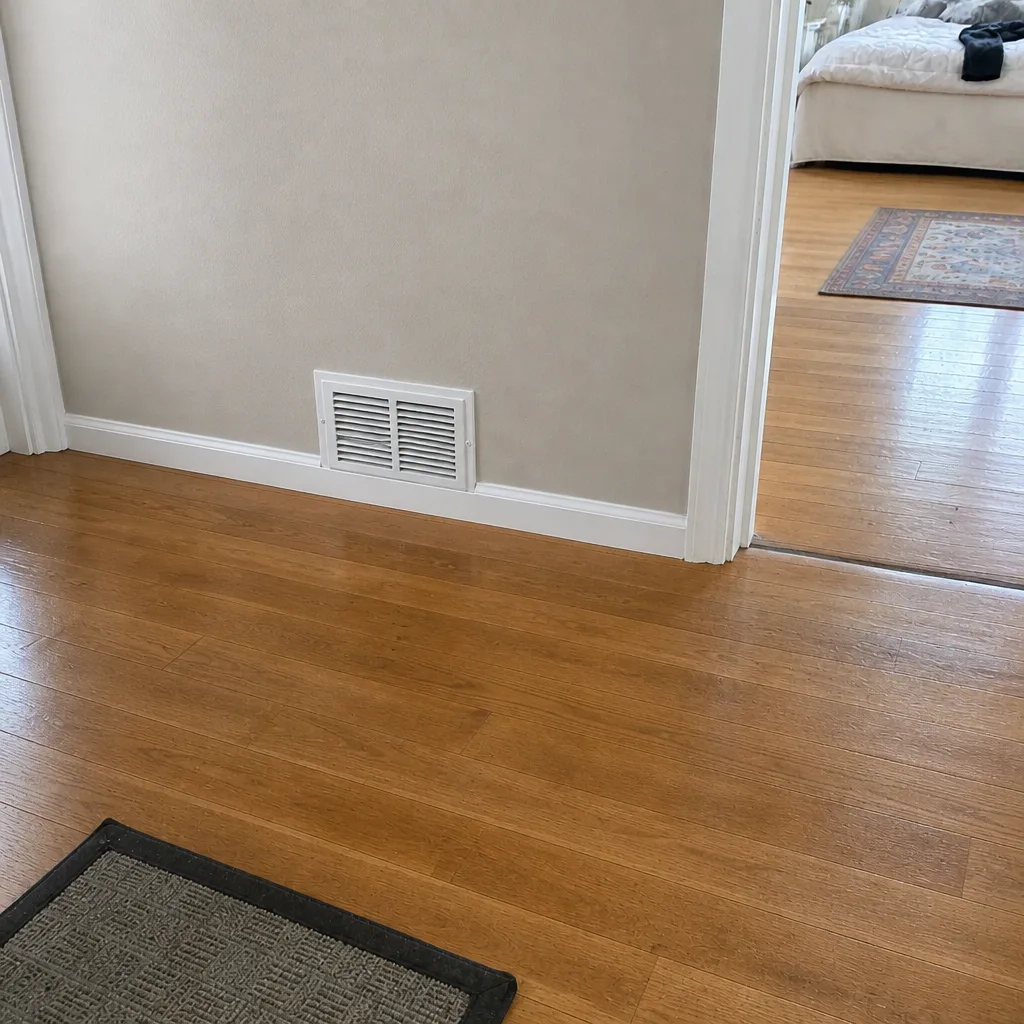 After
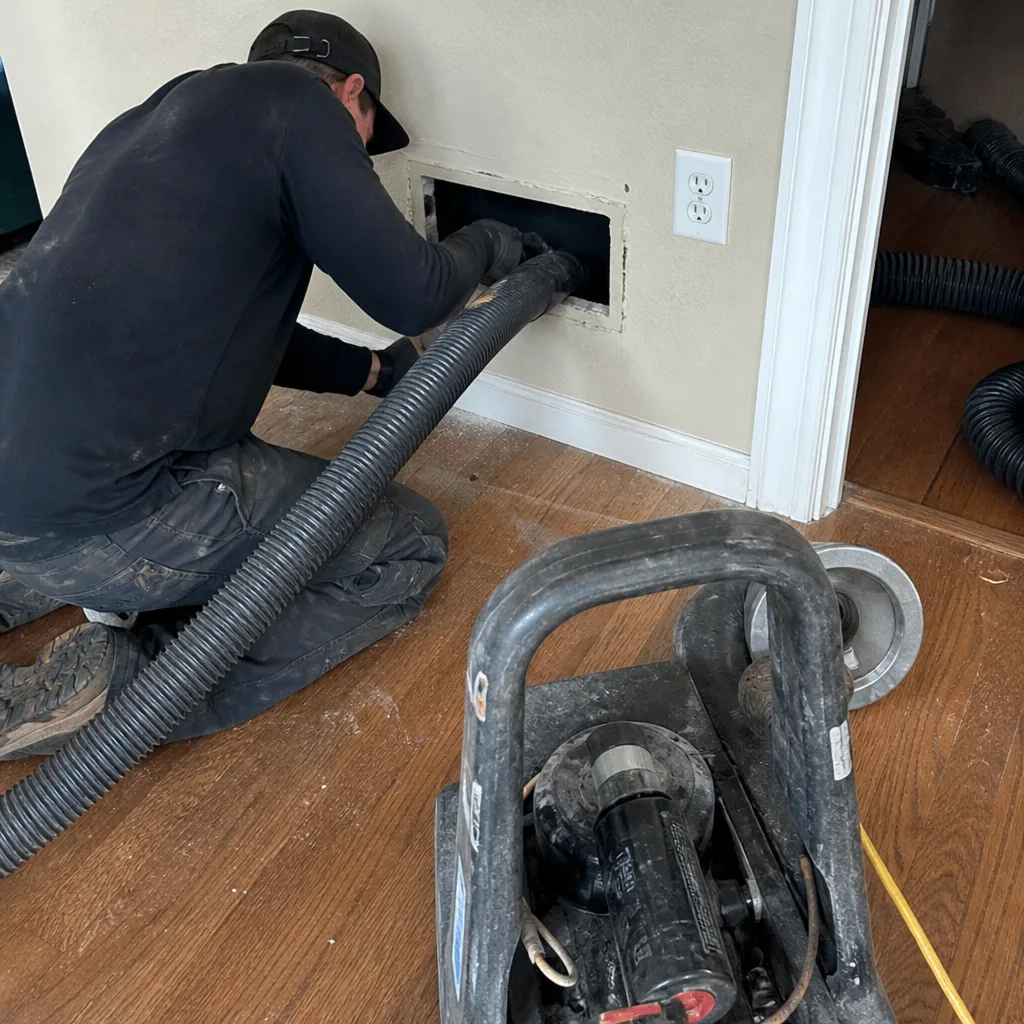 Before
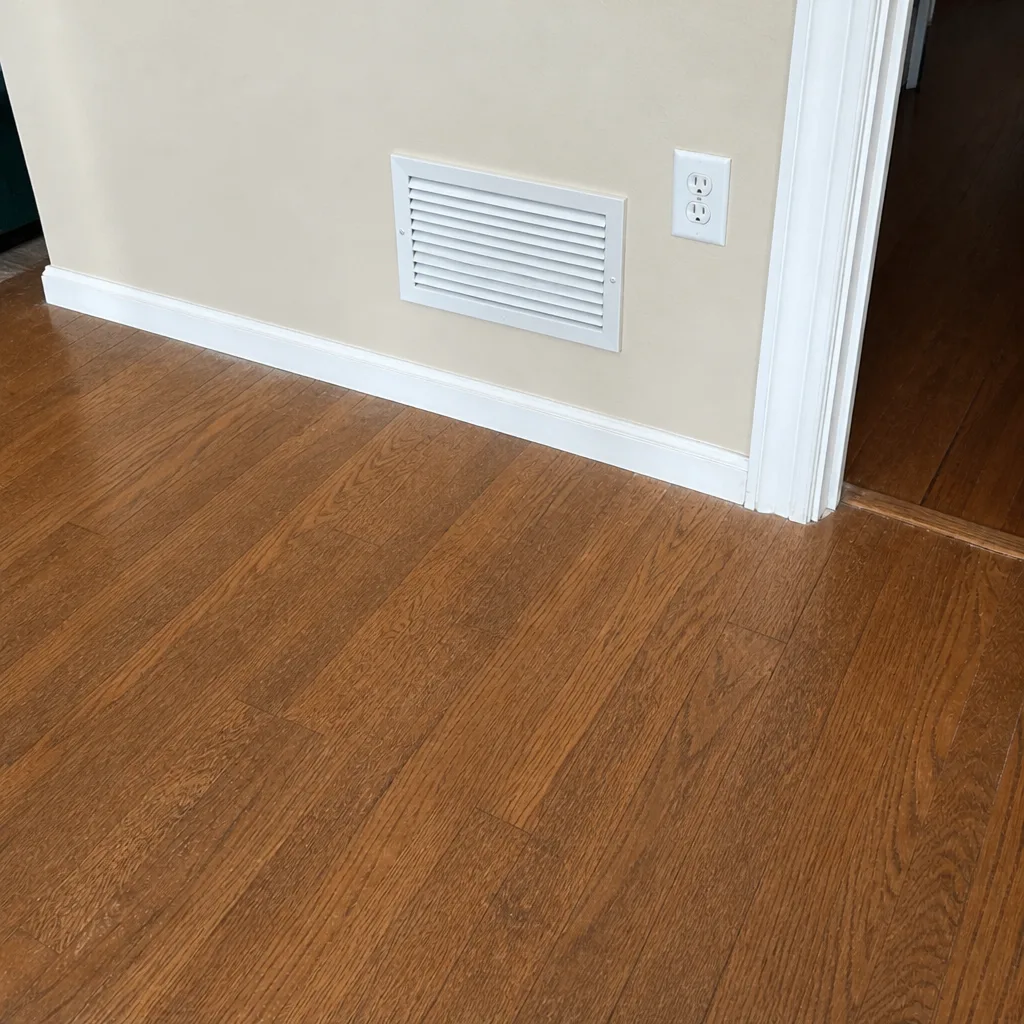 After
 Before
 After
When to Call a Professional
Call us when the symptom doesn’t match the fix. If you’ve had a cleaning and the dust, musty smell, or weak register is back within a couple of weeks, the problem is almost certainly outside the ducts – a leak, a coil issue, or a failing duct section. Call if a register has never worked well, if you’re seeing crushed or disconnected flex in the attic, or if the system hasn’t been serviced and you don’t know its history. Call if a post-cleaning odor has appeared, or if you’re planning a renovation and want containment sorted before the dust starts. Air Duct Cleaning Tallyn’s Reach offers free estimates in Tallyn’s Reach – call (855) 550-7311. We answer 24/7. Fast dispatch from 7am to 7pm, Sunday through Friday.
Frequently Asked Questions
The honest answer is that cost depends on the size of the system and what the inspection finds. A typical single-system home in Tallyn’s Reach falls in a range, and a job that includes coil cleaning, sanitizing, or sealing runs higher than a cleaning alone. We don’t quote per-vent numbers, and we don’t use teaser coupons – the price is set per job by the written estimate after we see the system. Call (855) 550-7311 for an exact quote; estimates are free.
Cheaper quotes usually exclude the steps that matter most: coil cleaning, HEPA containment, before-and-after photos, and a real inspection. A quote that leaves any of those out isn’t a lower price – it’s a smaller job. We include the full process on every job, and the written estimate tells you exactly what’s covered so you can compare like for like.
Before-and-after photos of your own ducts, taken during the job, plus a walkthrough of what was removed. If a crew can’t show you what was in your system and what came out of it, you can’t verify the work. We document both. Call (855) 550-7311 to schedule an estimate and ask to see what a completed record looks like.
For most Tallyn’s Reach homes, a cleaning every few years is reasonable, but the schedule depends on the system, the filter routine, and whether the ducts are sealed. Homes with pets, recent renovations, or unsealed attic runs need it more often. The bigger question is whether the system is leaking – fixing that changes the schedule more than cleaning frequency does.
That’s a leak signal, not a cleaning failure. Dust reappears when the system pulls unfiltered air through gaps at boots, plenum seams, or flex collars, or when the air handler and coil weren’t cleaned. In Tallyn’s Reach, the dry-winter/wet-summer swing works those seams loose year over year, so sealing matters as much as cleaning. We diagnose which one you’re seeing before recommending anything.
Only if the cause is dirt. A musty smell that persists after cleaning usually means biological growth on the evaporator coil or a degraded duct liner, and each requires a different fix – coil cleaning and drainage correction for the former, remediation or replacement for the latter. Cleaning the ducts alone won’t solve either.
The Bottom Line
Duct problems fall into three buckets: dirt, leaks, and design. Dirt responds to a thorough cleaning – HEPA containment, agitation, coil cleaning, and photos. Leaks respond to sealing at the joints, boots, and plenum. Design problems respond to pressure-balanced corrections, not damper adjustments. The diagnostic step – a tissue test, a static pressure reading, an attic inspection – tells you which bucket you’re in, and the wrong treatment just delays the right one. If you’re in Tallyn’s Reach and your last cleaning didn’t hold, start with diagnosis instead of scheduling another cleaning. We clean it, seal it, and improve it – and we’ll tell you honestly which one your system actually needs.
Call Air Duct Cleaning Tallyn’s Reach at (855) 550-7311 for a free estimate. We answer 24/7. Fast dispatch from 7am to 7pm, Sunday through Friday.
Written by the team at Air Duct Cleaning Tallyn’s Reach.